Laboratory Evaluation of CO Flooding: A Strategic Technology for Sustainable Development of Oil Companies
Hao Kang1, 2, Jian Gao3, 4 and Gang Hui5,*
1Polytechnic College, Hebei Normal University, Shijiazhuang 050024, China
2College of Engineering, Hebei Normal University, Shijiazhuang 050024, China
3Research Institute of Petroleum Exploration and Development, PetroChina, Beijing 100083, China
4State Key Laboratory of Enhanced Oil Recovery, Beijing, 100083, China
5Unconventional Petroleum Research Institute, China University of Petroleum (Beijing), Beijing 102249, China
E-mail: haokang@hotmail.com
*Corresponding Author
Received 03 June 2022; Accepted 28 June 2022; Publication 28 December 2022
Abstract
With the development of humankind, energy demand and climate change have both faced with serious situations now. In order to find new technologies for solving these problems, long core displacement experiment concerning CO flooding is conducted with 11 different core samples from N formation in M oilfield. Results show that oil production rate will be greatly improved and the oil recovery can reach nearly 25% by the CO huff and puff process using 3 rounds which is much higher than the real recovery factor in M oilfield. Considering the enhanced oil recovery and carbon storage effects generated by this technique at the same time, CO flooding is definitely a promising technique with great potential both for sustainable development of oil companies and humankind. For large scale field application, it is suggested that oil companies and governments should provide corresponding support policy concerning further study of this technology. Particularly, further studies should focus on the application of CO flooding with other EOR technologies, optimal CO injection mode, optimal CO injection rate, optimal CO injection pressure and so on.
Keywords: Sustainable development, carbon dioxide, sustainable strategy, carbon storage, carbon capture.
1 Introduction
With the development of human society in all aspect, the energy consumption has always been on the increasing trend and the carbon emission in the world is of giant quantity now [1–3]. This has led to many serious environmental problems which is of great threatening to the future survival of humankind [4–6].
In order to realize the harmony between man and nature through sustainable development, technology innovation has been viewed as one of the choice for moving ahead. Many studies are conducted concerning new technologies application for sustainable development and positive results are obtained in various areas: Hong et al. studied the application of bamboo materials for making biofilm reactor fillers which can provide technical support for the remediation of polluted river water quality [7]; Wang et al. constructed a Stackelberg game model to explore the subsidy mode for effectively promoting the biofuel ethanol industry in China, and they finally found out the main influential elements for the optimal subsidy mode which can be a good reference for policy making [8]; Zhou studied the generation of hydrogen through biomass under conditions of solar energy, and different catalysts are compared with the Fe-Ce catalyst be viewed as the optimal choice [9]; Cai et al. prepared and tested the Pd-Co-Ti catalyst, and their study can be good support for CO oxidation in flue gas generated thus air pollution can be better controlled [10]. All these studies adequately proves that new technologies application can be a good choice with bright prospects to realize sustainable development.
As a technique of great potential, CO flooding can increase the oil recovery greatly in the oilfield [11–15]. This process can also lead to the storage of CO into the underground formation [16–19]. Particularly, CO flooding technique can lead to two positive effects for petroleum industries:
On one hand, it can directly lead to the emission decrease of greenhouse gases from oil companies, and this is positive to meet the demand from governments for carbon emission reduction. On the other hand, many scholars have proved that CO flooding can be especially effective to increase the oil recovery of low permeable reservoirs which will be of better economic benefits for oil companies [20–23]. In fact, the oil reserve in low permeable reservoir shares a large portion of oil reserves in the total world. CO flooding can supplement the formation energy effectively and increase the production of single well. The total benefit can be very significant.
This paper firstly reviews the carbon dioxide emissions in a brief manner and explains the urgency for reduction the carbon emission. Then, laboratory experiment is conducted concerning the detailed characteristics of CO flooding. Finally, some useful conclusions are obtained concerning the application of this technique.
2 Carbon Dioxide Emissions
Based on data collected by BP from various resources [24], CO emissions are analyzed to illustrate the situation and the necessity for emission reduction.
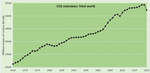
Figure 1 below shows the CO emissions of the total world since the year 1965. The vertical coordinate uses a unit of million tonnes. From the curve, it is obvious to see that the trend is generally always in an increasing pattern. In the past 55 years, the absolute value of world CO emission has increased from about 11000 to 32000. There are only 3 short decreasing periods: during the year 1979 to 1982, the year 2008 to 2009, and the year 2019 to 2020.
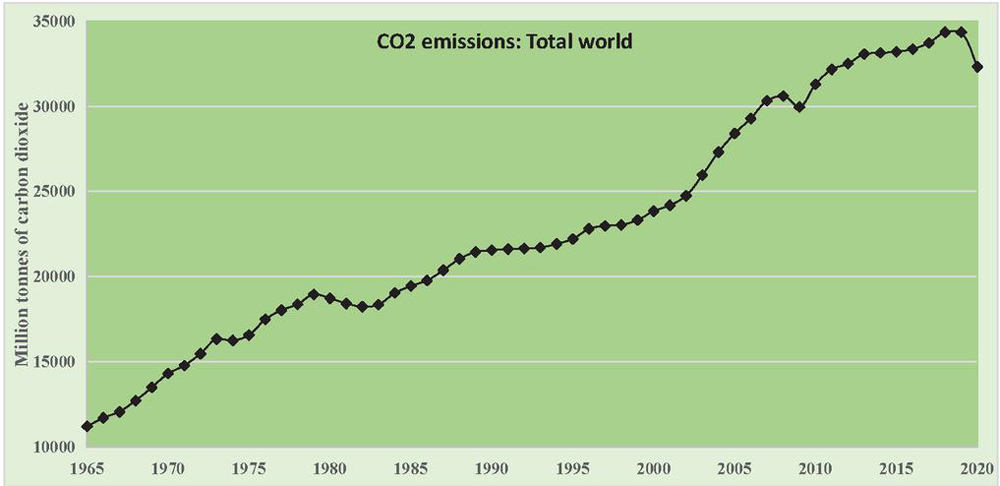
Figure 1 CO emissions of total world from year 1965 to 2020.
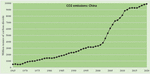
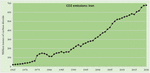
Specifically, since 2019, due to the influence of the Corona Virus Disease 2019, the carbon emissions showed a relatively big decrease all over the world. However, based on statistic data collected, there are still countries where carbon emission remains in the increasing pattern: China and Iran. In order to make more detailed analysis, the CO emissions in these two countries are illustrated in Figures 2 and 3 respectively.
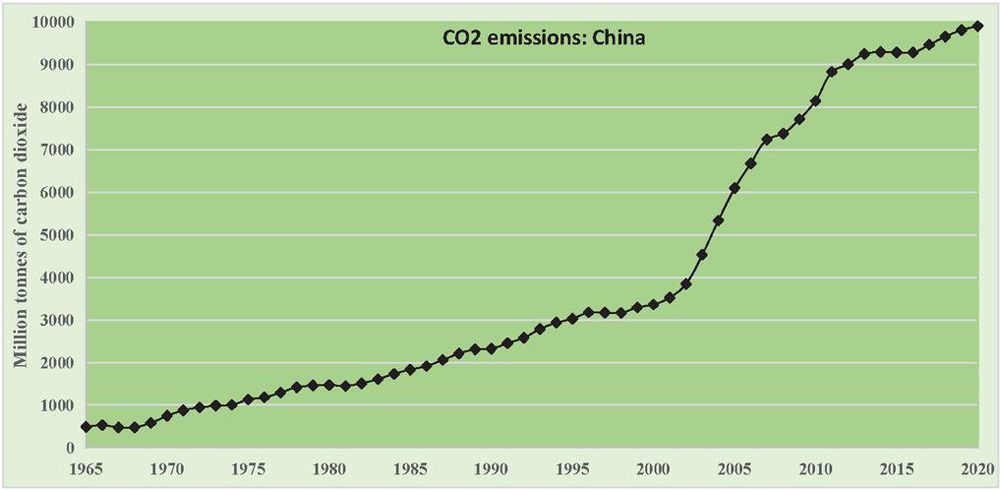
Figure 2 CO emissions of China from year 1965 to 2020.
Figure 2 shows the CO emissions in China since the year 1965. From the curve, it is obvious that the emission trend has always been in an increasing pattern without any decline. In the past 55 years, the absolute value of CO emission in China has increased from about 500 to 10000.
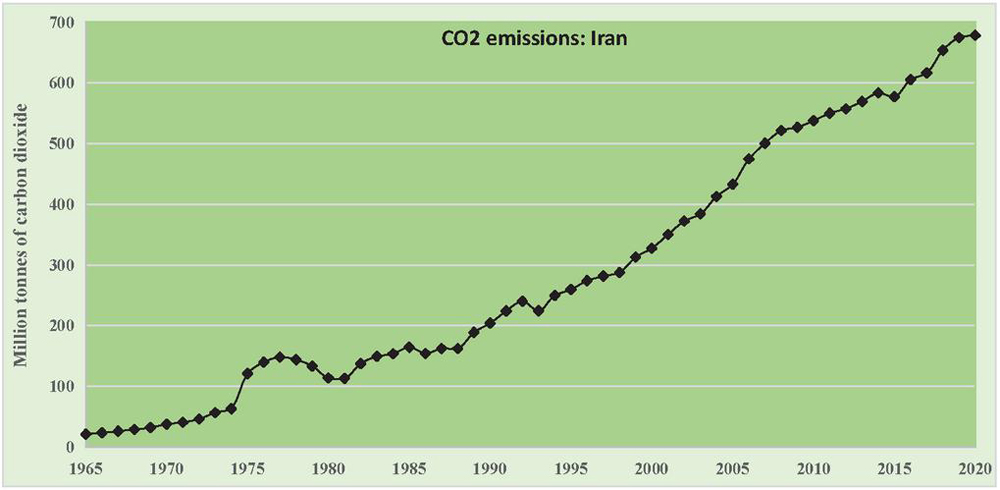
Figure 3 CO emissions of Iran from year 1965 to 2020.
Figure 3 shows the CO emissions in Iran since the year 1965. From the curve, it is obvious that the emission trend is generally in an increasing pattern with some small decline occasionally. In the past 55 years, the absolute value of CO emission in Iran has increased from about 20 to 680.
Although the general increasing pattern is the same between China and Iran, there is actually great difference between the emission level. Take year 2020 as an example, the total emission in Iran only accounts for 6.8% of the emission in China. Therefore, the situation in China is much more challenging than other countries in the world.
In fact, there is also countries whose CO emissions have already been in the declining pattern in recent years. Figure 4 illustrated the emission in US since year 1965. From the curve, it is obvious that the emission is actually not always in an increasing pattern at all. There are much more decreasing periods than that in Iran of China. Especially, after year 2006, the emission is generally in a single decrease pattern. This is mainly due to the innovation of technology in US: the development of shale gas has achieved great success in US and many industrial projects once flaring coal starts to flaring gas from then on, so the CO emissions can be greatly reduced by using natural gas as a clean energy.
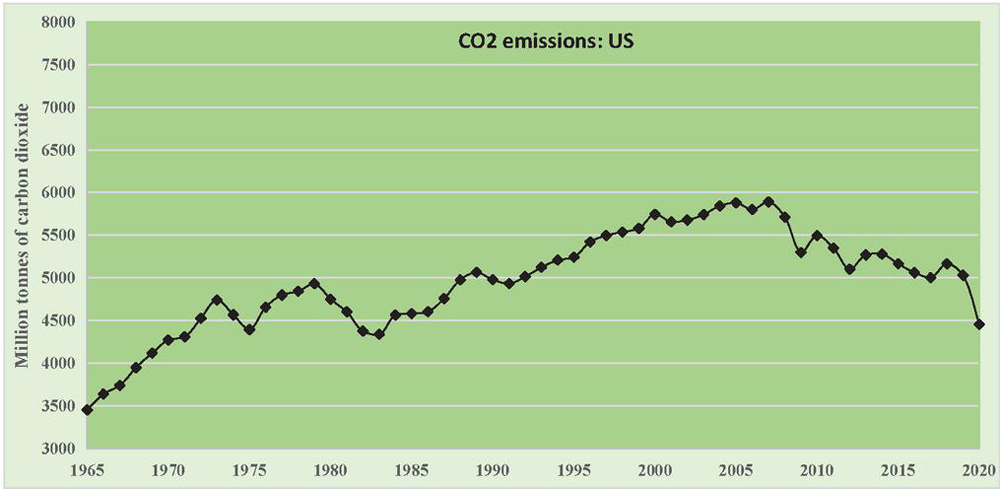
Figure 4 CO emissions of total North America from year 1965 to 2020.
3 Enhanced Oil Recovery Experiment by CO Flooding
3.1 Experiment Preparation
In the development process of tight oil, reservoir pressure and productivity usually drop quickly, and it is difficult to inject adequate water into the reservoir for energy supplement purpose. Therefore, there is great challenge to improve the recovery of tight oil reservoir. Based on field experiences and laboratory experiments, CO flooding is regarded as an important way for enhanced oil recovery. In the CO flooding process, the oil will expand and its viscosity will decrease, and the formation energy can be supplemented. Finally, the recovery of tight oil reservoir will be increased.
Currently, there have been many studies concerning the huff and puff of CO. Man-made or ordinary core has been usually used in the laboratory experiment tests. However, since the tight oil reservoir is of great heterogeneity, the ordinary core cannot model this characteristic adequately. Therefore, in this study, the long core is used to evaluate the huff and puff process of CO, and this can be good reference for enhanced oil recovery in tight oil reservoir by huff and puff of gases.
To carry on the experiment, eleven cores are selected from the N formation in M oilfield and the total length of cores is 95.93cm. The cores are selected with permeability of different range and the heterogeneity of formation can be better characterized.
Table 1 Fundamental parameters of long core
| Core No. | 1 | 2 | 3 | 4 | 5 | 6 | 7 | 8 | 9 | 10 | 11 |
| Length/cm | 8.8 | 8.6 | 8.9 | 8.3 | 8.8 | 9.2 | 8.7 | 8.8 | 8.7 | 8.4 | 8.8 |
| Diameter/cm | 2.50 | 2.51 | 2.50 | 2.48 | 2.48 | 2.50 | 2.49 | 2.49 | 2.49 | 2.50 | 2.50 |
| Permeability/ | 6.5 | 0.23 | 0.24 | 0.17 | 0.14 | 0.33 | 0.13 | 0.36 | 0.12 | 0.40 | 0.69 |
| 10m | |||||||||||
| Porosity/% | 14.1 | 12.1 | 10.6 | 10.3 | 6.6 | 11.3 | 9.3 | 11.2 | 9.9 | 12.1 | 12.6 |
The average permeability of long core is calculated as Formula (1) below. In this formula, L stands for the length and K stands for the permeability of each core. The specific detailed parameters of cores are as illustrated in Table 1.
| (1) |
The apparatus used in this experiment is the displacement apparatus large enough which can model the displacement experiments in the long core under high pressure (up to 70 MPa) and high temperature (up to 200C) conditions. The apparatus is composed of five systems: injection system, modelling system, production system, data collection system, and supplementary system. It can model the production process of water flooding, gas flooding, chemical flooding and so on. Since the core permeability in this experiment is extremely low, the pressure difference has to be high enough for effectively driving the fluids. Therefore, the back pressure is set to be relatively lower so that the inlet pressure does not need to be very high.
3.2 Experiment Procedure
The experiment procedure of CO huff and puff is as follows:
(1) Put the core into the vacuum apparatus and using the vacuum pump to suck at least 48 hours to create vacuum. After that, saturate the core with standard salt water.
(2) Put the core into the core holding unit. Increase the surrounding pressure to above 1.52.0 MPa than the injection pressure and increase the back pressure accordingly. Increase the temperature to the experimental set temperature at 60C. After the pressure and temperature are in steady state for enough time, saturate the core by injecting oil into it.
(3) The huff and puff process are set to happen without miscibility of CO with the oil. In the huff process, the CO is generally intended to be injected by 0.3 pore volume. Then, the injection process will be ceased and the system will stay for about 1 hour. After that, the puff process will be started with oil production. Cumulative oil production, cumulative gas production and so on will be recorded promptly for following data analysis purpose. One thing to be paid special attention: in the puff process, micro flow-rate control valve is used for flow and pressure control, thus fast pressure decrease can be avoided.
(4) After the CO huff and puff process above, ethyl ether will be consistently injected into the core until there is no oil produced from the end. Therefore, the core can be cleaned by this process.
(5) Nitrogen will be injected after the above process, and the residual ethyl ether will be swept out from the core.
(6) Data analysis or the next round of experiment can be carried on.
4 Results and Discussion
After getting data from the experiment, the data are illustrated in figures below to clearly show the results.
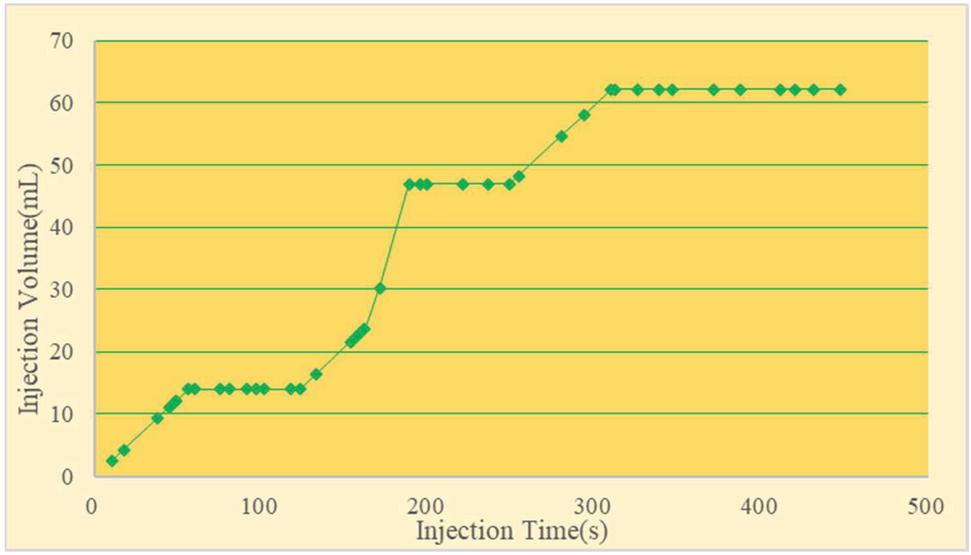
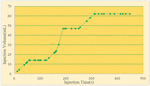
Figure 5 Relationship between injection volume and injection time.
Figure 5 shows the procedure of the whole experiment: the relationship between the injection volume and injection time. In periods 0–56 min, 118–188 min, and 248–308 min, CO injection is conducted. In other periods between 0 to 448 min, injection is ceased and oil production is conducted after the soak period. Actually, there has been adequate study concerning the soak time of CO huff and puff [25]. Zhan et al. conducted reservoir simulation on basis of a single well model, the multiple linear regression method is applied to find the relationship between soak time and 5 influencing factors. These factors include reservoir permeability, CO injection volume, reservoir porosity, formation oil saturation, and CO injection rate. Their study results show good fit towards the real CO huff and puff case of Yushulin oilfield. In fact, the management of soak process is a crucial and complicated process. The management system should be established based on the characteristics of oil reservoir reaction during this process. In this view, further studies should be conducted concerning the soak time towards specific reservoirs to realize highly efficient production management.
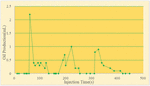
To further investigate the oil production process, Figure 6 illustrates the relationship between oil production and injection time. From Figure 6, it is easy to see that the oil production can reach 2.2 mL in the first round of puff process. The oil production can reach 1.0 mL in the second round of puff process and the oil production is lower than 1.0 mL in the third round of puff process. This trend shows that the oil production diminishes with the huff and puff process going on.
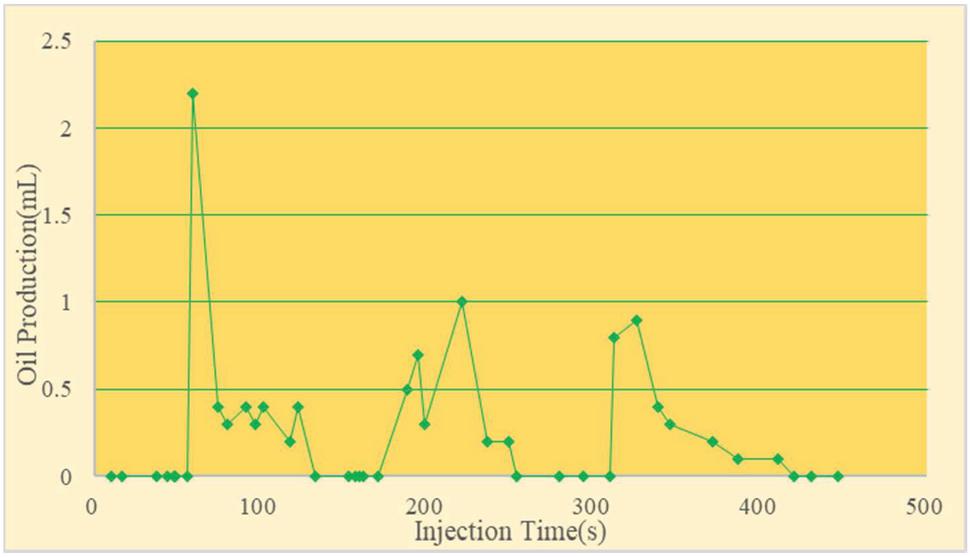
Figure 6 Relationship between oil production and injection time.
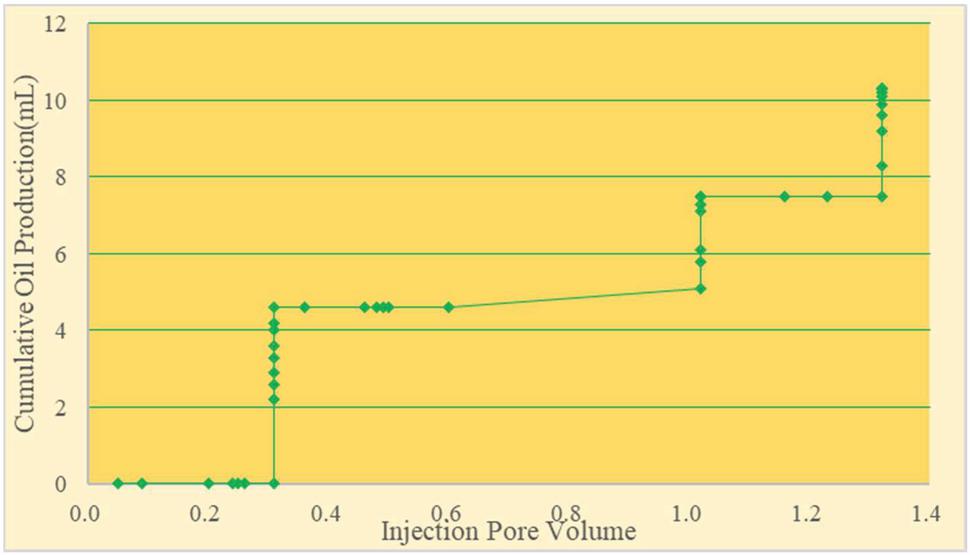
Figure 7 Relationship between cumulative oil production and injection pore volume.
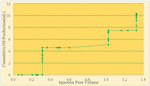
Figure 7 illustrates the relationship between cumulative oil production and injection pore volume. In the first round of huff and puff process, the cumulative oil production reaches 4.6 mL while the injection pore volume is only 0.3. In the second round, the injection pore volume is 0.7, while the cumulative oil production increases only by 2.5 mL. In the third round, the injection pore volume is set as 0.3, and the cumulative oil production increases by 2.5 mL again at the same level with that in the second round.
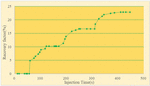
Figure 8 illustrates the relationship between recovery factor and injection time. In the first round of puff process, the recovery factor reaches a relatively high level. In the second and third round of oil production, the recovery factor decreases to a relatively low level. Actually, this result can also be deducted or calculated from results above.
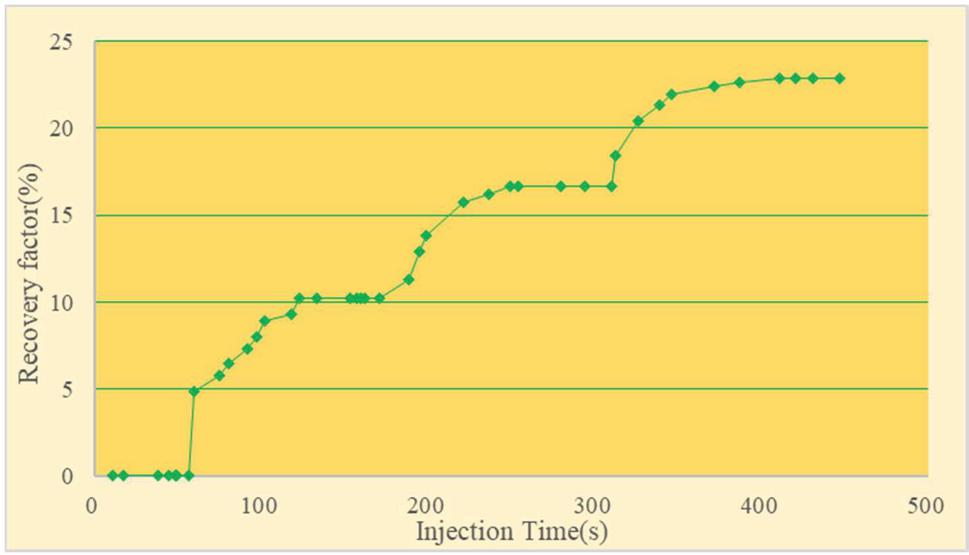
Figure 8 Relationship between recovery factor and injection time.
Actually, Qi et al. conducted research on CO huff and puff in low permeability reservoir of the Ordos Basin[21]. Both laboratory experiments and pilot tests are conducted concerning this technology. After the injection period, there are great increase concerning liquid production rate and oil production rate on site. The oil recovery factor are greatly enhanced by this technology. This pilot test shows great prospect for the large-scale application of CO flooding in Yanchang oilfield and will definitely promote the stable production of this oilfield to finally realize the goal of sustainable development for local economy in the Shanxi Province of China.
In all, the first round of huff and puff process showed better results in oil production rate, recovery factor and so on. The second and third rounds show relatively poorer results, whereas, there is not very sharp difference between the last two rounds. At the end of the three rounds, the total recovery factor can reach as high as about 25% which proves the great potential of CO flooding technique for enhanced oil recovery and sustainable development.
Actually, Liu et al. studied the application of CO huff and puff into untra-high water-cut reservoir [26]. In-depth profile control technique is firstly used to plug the predominant flow channels and very good results with enhanced oil recovery are obtained after the CO huff and puff process. This study also indicates that CO flooding technology has good adaptability and can be applied together with other EOR techniques to achieve improved oil recovery. Oil companies can provide more support for research on this area in future. For example, the study on CO injection alternating with water should also be a technology with good prospect. Li et al. conducted pilot test in the Changqing oilfield and the oil production is greatly improved with lower water cut [27]. However, due to the whole complicated process, many parameters can actually be optimized further, such as the injection pressure, the injection rate, the injection mode and so on. Accordingly, oil companies will find new opportunities for technical breakthrough in these related studies by near future.
5 Conclusion
The world CO emissions are in serious situation nowadays and it is urgent to find out effective strategies to change this trend. At the same time, the demand for oil and other energy resources has also been in a very high level and many oilfield companies face the problem of extreme low production with little profit. CO flooding can achieve enhanced oil recovery and carbon underground storage effectively at the same time, it is a technique with great potential for sustainable development of oil companies and the humankind. Long core displacement experiment is conducted in this study with core samples of different porosity and permeability from low permeable reservoir. On the laboratory test scale, oil recovery can reach nearly 25% by the CO huff and puff process in 3 rounds, and this is much higher than the current recovery factor in the M oilfield studied which shows the real potential of CO flooding technology. At the same time, only a few parameters are actually considered in this study. In future, it is suggested that oil companies should provide more support concerning the study of more aspects of CO flooding, such as the application of CO flooding with other EOR technologies, the CO injection mode, the CO injection rate, the CO injection pressure and so on. In this way, this technology will be further developed and sustainable development both for companies and humankind will be more easily to be achieved.
Acknowledgments
This work was supported by Science and Technology Project of Hebei Education Department (GRANT NO.: QN2018158), by Open Fund of State Key Laboratory of Enhanced Oil Recovery, CNPC (GRANT NO.: 2022-KFKT-29) and by Science and Technology Fund of Hebei Normal University (GRANT NO.: L2017B21). I would also like to thank the editorial and reviewer panel for their input and comments.
Conflict of interest
The authors all declare that they have no conflict of interests regarding the publication of this paper.
References
[1] Wang Suli. ‘The Trend Analysis of the World’s Low-Carbon Economy Development’, Journal of Guizhou College of Finance and Economics, no. 3, pp. 87–92, 2013.
[2] Zhu Jiangling, Yue Chao, Wang Shaopeng, et al. ‘Carbon Emissions in China and Major Countries from 1850 to 2008 (Carbon Emissions and Social Development, I)’, Acta Scientiarum Naturalium Universitatis Pekinensis, vol. 46, no. 4, pp. 497–504, 2010.
[3] Wang Yimei, Zhang Yufen, Feng Yinchang, et al. ‘A Factor-decomposition Method on Carbon Emission from the Energy Consumption in China and Some Other Typical Countries’, Journal of Safety and Environment, vol. 11, no. 4, pp. 81–86, 2011.
[4] Tu Wei, Liu Qinpu. ‘Environmental Risk Assessment of Tourism Carbon Emission in Jiangsu Province Based on Forest Carbon Sink Threshold’, Forest Resources Management, no. 1, pp. 86–94, 2022.
[5] Jiang Baozhen, Lu Zhou. ‘Carbon Emissions, Natural Disasters and BRICS’ Natural Capital Growth’, Journal of Zhejiang University of Technology (Social Science), vol. 19, no. 4, pp. 442–448, 2020.
[6] Wang Yingjun, Li Rongbo, Li Binggeng, et al. ‘The Harm of Climate Change and Its Countermeasures’, Science & Technology Information, vol. 19, no. 13, pp. 92–95, 115, 2021.
[7] Hong Qiankun, Zhang Hangli, Zhang Shixia. ‘Study on the Efficiency Treatment of Polluted Water by Biofilm Process Filled with Bamboo Filler’, Strategic Planning for Energy and the Environment, vol. 41, no. 3, pp. 241–254, 2022.
[8] Wang Xiaotian, Zhao Hui. ‘Analysis and Comparison of China’s Biofuel Ethanol Subsidy Modes’, Strategic Planning for Energy and the Environment, vol. 40, no. 4, pp. 363–386, 2021.
[9] Zhou Yanping. ‘Study on Hydrogen Production From Solar Biomass Based on Fe-Ce Catalyst’, Strategic Planning for Energy and the Environment, vol. 40, no. 4, pp. 407–420, 2021.
[10] Cai Jianyu, Yu Zehui, He Junda, et al. ‘Application Research on Pd-Co-Ti Catalyst for Purifying CO in Flue Gas of Hot-blast Stove in Steel Rolling Mill’, Strategic Planning for Energy and the Environment, vol. 40, no. 4, pp. 455–470, 2021.
[11] Lang Dongjiang, Lun Zengmin, Lv Chengyuan, et al. ‘Nuclear Magnetic Resonance Experimental Study of CO Injection to Enhance Shale Oil Recovery’, Petroleum Exploration and Development, vol. 48, no. 3, pp. 603–612, 2021.
[12] Tang Shuheng, Ma Caixia, Ye Jianping, et al. ‘A Modeling Experiment of Enhancing Coalbed Methane Recovery by Carbon Dioxide Injection’, Journal of China University of Mining & Technology, vol. 35, no. 5, pp. 607–611, 616, 2006.
[13] Gao Huimei, He Yingfu, Zhou Xisheng. ‘Research Progress on CO EOR Technology’, Special Oil & Gas Reservoirs, vol. 16, no. 1, pp. 6–12, 2009.
[14] Jiang Huaiyou, Shen Pingping, Chen Lidian, et al. ‘The Status of EOR Technology Using CO in North American Oil Industry’, Energy of China, vol. 29, no. 7, pp. 30–34, 2007.
[15] Huang Aijun, Tian Fenglan, Jin Xiaoli, et al. ‘In-Situ Generation of Carbon Dioxide: New Way to Increase Oil Recovery’, Foreign Oil Field Engineering, vol. 18, no. 7, pp. 5–7, 2002.
[16] Jiang Huaiyou, Shen Pingping, Zhong Taixian, et al. ‘The Relationship Between CO Storage and Oil Recovery Enhancing’, Petroleum Geology and Recovery Efficiency, vol. 15, no. 6, pp. 52–55, 2008.
[17] Li Kunquan, Li Ping, Wei Minzhang, et al. ‘A Pilot Project of CO Enhanced Oil Recovery and Storage in Chang 9 Extra-low Permeability Reservoir in Huang 3 District of Changqing Oilfield’, Journal of Engineering Geology, vol. 29, no. 5, pp. 1488–1496, 2021.
[18] Wang Gaofeng, Qin Jishun, Huang Chunxia, et al. ‘Calculation of Carbon Dioxide Simultaneous Sequestration Potential in Low Permeable Reservoirs’, Science Technology and Engineering, vol. 19, no. 27, pp. 148–154, 2019.
[19] Shen Pingping, Liao Xinwei, Liu Qingjie. ‘Methodology For Estimation of CO Storage Capacity in Reservoirs’, Petroleum Exploration and Development, vol. 36, no. 2, pp. 216–220, 2009.
[20] Hao Hongda, Hou Jirui, Zhao Fenglan, et al. ‘Experiments of Gas Channeling Control During CO Immiscible Flooding in Low Permeability Reservoirs with Heterogeneity’, Petroleum Geology and Recovery Efficiency, vol. 23, no. 3, pp. 95–100, 115, 2016.
[21] Qi Chunmin, Li Ruidong, Zhu Shidong, et al. ‘Pilot Test on CO Flooding of Chang Oil Reservoir in Yougou Region of the Ordos Basin’, Oil Drilling & Production Technology, vol. 41, no. 2, pp. 249–253, 2019.
[22] Zhong Liguo, Han Dakuang, Li Li. ‘Analysis of the Sensitivity of Carbon Dioxide Huff ‘n’ Puff for Fractured Reservoirs with Low Permeability’, Journal of Daqing Petroleum Institute, vol. 33, no. 4, pp. 125–129, 2009.
[23] Sun Tongying. ‘Pilot Test on CO Flooding of Low Permeability Oil Reservoir in Dongpu Sag’, Petrochemical Industry Application, vol. 40, no. 4, pp. 28–30, 35, 2021.
[24] BP. BP Statistical Review of World Energy 2021. London, June, 2021.
[25] Zhan Fei, Dong Chi, Zhang Heping, et al. ‘Research on Universal Mathematical Model of Reasonable Soak Time for CO Huff and Puff’, Mathematics in Practice and Theory, vol. 49, no. 12, pp. 151–158, 2019.
[26] Liu Daojie, Shi Ying, Xuan Lingling, et al. ‘In-Depth Profile Control and Carbon Dioxide Huf-Puf in the Late Stage of Ultra-High Water-Cut Oil Reservoir Development’, Special Oil & Gas Reservoirs, vol. 25, no. 2, pp. 65–69, 2018.
[27] Li Kunquan, Li Ping, Wei Minzhang, et al. ‘A Pilot Project of CO Enhanced Oil Recovery and Storage in Chang 8 Extra-low Permeability Reservoir in Huang 3 District of Changqing Oilfield’, Journal of Engineering Geology, vol. 29, no. 5, pp. 1488–1496, 2021.
Biographies

Hao Kang received the bachelor’s degree in Petroleum Engineering from China University of Petroleum in 2008, and the philosophy of doctorate degree in Petroleum Geology from Peking University in 2014, respectively. He is currently working at the College of Engineering, Hebei Normal University. His research areas include exploitation and utilization of energy resources.

Jian Gao received the bachelor’s degree in Petroleum Engineering from Southwest Petroleum University in 1998, and the philosophy of doctorate degree in Petroleum and Natural Gas Engineering from China University of Petroleum in 2007, respectively. He is currently working at the Research Institute of Petroleum Exploration and Development, PetroChina. His research areas include exploitation and utilization of energy resources.

Gang Hui, corresponding author of this paper, received the bachelor’s degree in Petroleum Engineering from China University of Geosciences in 2008, and the philosophy of doctorate degree in Petroleum Engineering from University of Calgary in 2021, respectively. He is currently working at Unconventional Petroleum Research Institute, China University of Petroleum. His research areas include exploitation of unconventional oil and gas resources.
Strategic Planning for Energy and the Environment, Vol. 42_1, 21–36.
doi: 10.13052/spee1048-5236.4212
© 2022 River Publishers