Asbestos in Schools Units – Environment Protection Policies. Greece: As Case Study
Agisilaos Economou1 and Roido Mitoula2,*
1National Technical University of Athens, Greece
2Harokopio University of Athens, Greece
E-mail: aghs@mail.ntua.gr; mitoula@hua.gr
*Corresponding Author
Received 05 May 2025; Accepted 14 May 2025
Abstract
The widespread use of asbestos in the past in building materials for many schools and the improper maintenance of these schools right up to the present, is a serious problem that the country has to face up to. This has had serious effects on human health. The present paper using as point of reference the various asbestos management policies applied in school units in the UK and the USA, focuses on Greece as a case study taking into account EU directions and guidelines. The research methodology is founded on data from various studies, legal frameworks, and EU Directives, as well as on personal interviews with the managers of the Building Infrastructures (BI), a body responsible for the management and resolution of the asbestos problem in Greek school units. Overall, the research underlines the fact that the asbestos issue is still prevalent and a huge amount of money is required for its resolution. In Greece, the implementation of a management plan for the removal of asbestos from school units was launched in 2004.
Keywords: Asbestos in schools units, asbestos management.
1 Introduction
According to the EU 1999/77/EC Directive, the use of asbestos and of products that contain asbestos can have negative effects on human health (asbestosis, lung cancer) [1]. Short and thin asbestos fibers may contribute to the development of malignant mesothelioma in humans [2].
Although the use of asbestos has been banned in the European Union (91/659/EC), every year approximately 3,000 people in the UK die from diseases caused by their exposure to asbestos [3]. In addition, 828 cases were diagnosed in Germany in 2007 as lung or larynx cancer brought about by exposure to asbestos and a further 948 cases have been diagnosed as asbestos-related mesothelioma [4].
On the other hand, many schools units, as shown below in this paper, were built during the peak of asbestos use in building materials. As a result many students and teachers find themselves at risk from exposure to asbestos.
The aim of the paper is to assess the potential impact of asbestos in schools in Greece as well as the methods currently applied to reduce its environmental impact taking into account current legal frameworks both at national and European levels.
From 2003 to 2007 – despite the problems it causes- the global use of asbestos was of 2.11 million tons. The highest consumption was observed in 8 countries representing the 80% of global consumption: China (30%), India (15%), Russia (13%), Kazakhstan (5%), Brazil (5%), and Thailand, Uzbekistan and Ukraine with 4% each. On the other hand, more than 50 countries had banned the use of asbestos by May 2009 [5].
2 Material and Methods
The present research is founded on legal frameworks at national, European and global levels. The asbestos management policies in the United States of America, in the United Kingdom and in Greece, as well as EU directives and regulations have been investigated.
At the same time the research also focuses on interviews with people who are in charge of the asbestos management, the policy applied and the resulting actions in dealing with the asbestos issue in Greek schools.
The present research makes use of the Building Infrastructures (BI) (Ktiriakes Ypodomes S.A former as Greek School Buildings Organization) statistical data. Ktiriakes Ypodomes S.A. is an innovative state-owned company. The company’s activities are overseen by the Ministry of Infrastructure and Transport
3 Asbestos Management
3.1 Europe
The European Union has published a series of Directives including terms and limitations to enforce appropriate measures in order to fight the harmful impact of asbestos on human health and on the environment.
3.2 Asbestos Management
We quote below the EU Directives on asbestos management as well as the bans and the limits for its use on the market: Directive 76/769/EEC [6] amended to Directives 83/478/EEC [7], 85/610/EEC [8], 87/217/EEC [9], 89/678/EC [10], 91/659/EEC [11], 1999/43/EEC [12] and 1999/77/EC [13]. Other Directives such as the 83/477/EEC (EC, 1983a) [14], amended to 91/382/EEC [15], relate to workers’ protection from their exposure to asbestos during work.
In addition, Directives have been issued to monitor and control transport waste within the European Community, as well as for its entry or exit; Regulations 259/93 EEC [16], 93/98/EEC [17] refer to the control of trans-boundary transport of hazardous waste, in keeping with the Basel Convention; Regulation 259/93/EEC [18] deals with the limitation and control of these transports, and has been amended to Regulation 120/97/EC [19]. The European Council Decision 97/640/EC [20] refers to the approval of all export bans of hazardous waste on behalf of the Community sent to countries outside the OECD (Organisation for Economic Co-operation and Development). It was enforced on 1 January 1988.
The member-states in accordance with the European Policies guidelines must:
• Take into account the need for coordination of their national systems for waste transport with the European system [21].
• Contribute to the creation of an integrated and adequate waste disposal network so that each community may become self-sufficient in handling waste disposal [19].
• See to a proper disposal of hazardous waste on the part of authorities and enterprises authorized to collect and/or transport this type of waste [22].
3.3 Disposal of Asbestos Waste
The European Union Policy for asbestos waste management is included in the Directive 1999/31/EC [23] on landfills, a Directive further amended by the Decision 2003/33/EC [24] on procedures and acceptance criteria of waste in landfills. Moreover, the EU Policy also takes into account Directives for hazardous waste such as 91/689/EEC [25] and 2006/12/EC [21] which replaced Directive 75/442/EEC [26] later amended by Directive 91/156/EEC [22].
Thus, according to the Council Decision of 19 December 2002 [24], all construction materials that contain asbestos or other waste which includes asbestos can only be disposed of in hazardous waste landfills under the following conditions:
• The waste must not include other hazardous substances other than asbestos.
• The landfill requires asbestos waste to be buried in a separate section.
• When disposing of asbestos, all necessary measures must be taken into account in order to prevent fiber dispersion and the deposit zone must be covered with an appropriate material.
• To maintain a location plan of the asbestos deposit and to take all necessary measures to reduce all other possible land use of the landfill in an effort to avoid all human contact with this dangerous substance.
The installation deposit of asbestos waste should be monitored for cracks that may be caused by land slides; in this case immediate measures must be taken in order to prevent contact of any type of waste with the surrounding water and air [27].
Nowadays asbestos deposits consist of special waste landfills or vitrified installations. Asbestos is subject to high temperatures which modify it into a final vitrified inert matter that can be used for roads, among other uses. It must be noted that the vitrifying process requires much more energy than other processes. Furthermore, underground mines can be used as deposits for asbestos waste [28].
This research allows us to conclude that the asbestos waste management takes the following steps in EU countries (Figure 1).
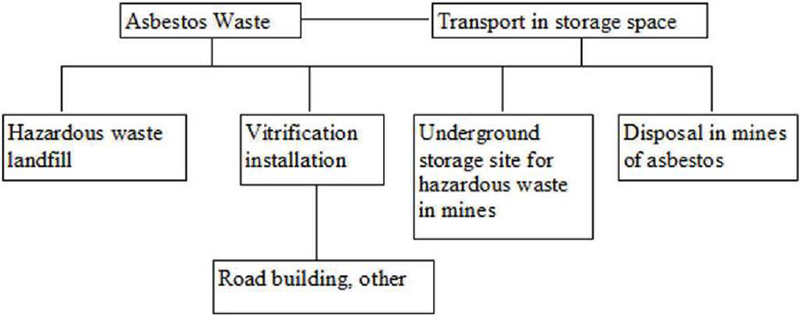
Figure 1 The diagram depicts asbestos deposit in European Union countries.
3.4 Greece
Initially, the hazardous waste management in Greece is based on environmental studies and on its storage in a special waste area of a landfill. Every work or activity which includes the use of asbestos or of any products or treatment there of requires approval in environmental terms. Environmental approval is granted if it is ensured that the given activities do not cause significant environmental pollution deriving from dust or asbestos fibers.
When carrying out an activity that includes the use of asbestos or the treatment of products that contain asbestos, the person in charge has to take all the necessary steps for the prevention of asbestos gas emission and asbestos water waste, as well as for the maintenance of marginal values.
According to Hellenic legislation for the deposit of water waste, the highest limit is 30 gr of suspended particles per m3 of discarded water waste [29].
The removal of asbestos (the demolition or the partial removal from buildings such as insulating compounds and plasters) can only be carried out after approval of the Ministry for the Environment and with the application of provisions in Article 14 of the Presidential Decree 70/1988 [30] on the reduction of asbestos fiber emission in the environment. Also, the asbestos materials are infiltrated, when it is necessary and for their safer transport, through special bottles or waterproof sacks which are safely closed and are marked for their final disposal.
Before its disposal in a landfill, waste coming from industry processes of asbestos is subject to a physicochemical treatment process. On the other hand, waste derived from the production of asbestos - cement which includes asbestos can undergo not only stabilization but also physicochemical treatment processes [31].
Greece, as member-state of the European Union must apply the EU environmental policy, as well as having to protect its own environment and public health. Therefore an appropriate management of hazardous waste is not only a priority for Greece but also a necessity [32].
The measures and terms for hazardous waste management are being implemented in the European Union and are in keeping with Greek legislation according to the terms of Directive 91/689/EEC [25] for hazardous waste. Furthermore, the use and the disposal of fibers and asbestos products is prohibited in the local market except when the products have been marked according to the provisions in the Presidential Decree 445/1983, Appendice II [29].
Although there are directives of European Union on the management of asbestos, there was no immediate response for construction of infrastructure for the storage of asbestos. This lack of information, bureaucracy and non-social acceptance for the disposal of Asbestos materials in some areas, has a result in Greece there is no infrastructure for the management and storage of hazardous waste. This results in a temporary storage in special areas of hazardous waste, mainly from industry which produces a huge amount of waste, or in its transport to appropriate EU installations abroad (Belgium, France, Germany, Finland and United Kingdom).
For example in 2004, an amount of 1500 tons of waste was transferred abroad, mainly to Germany (up to 70%), and up to 2004 the amount of domestic hazardous waste in store reached approximately 600,000 tons, according to the Ministry of the Environment [33].
As for waste production with asbestos (insulating compounds or building materials which contain asbestos), the amount was 8,590 tons, which is equivalent to 2.57% of the total production of domestic hazardous waste in 2004.
For the collection, transfer and management of hazardous waste, specific companies have been selected within legal frameworks. Thus, there are 15 companies which are responsible for the collection and transfer of waste, 10 of which carry out trans-boundaries transfers.
Generally speaking, hazardous waste management continues to be a serious environmental issue in Greece due to a lack of central treatment installation and final deposit of hazardous waste, but also due to a social rejection of solutions that have been submitted. Many temporary storage spaces of hazardous waste (60% of the total production) become permanent storage spaces without having the technical construction and operational conditions. Nowadays all industrial production units of hazardous waste are expected to send hazardous waste management plans to the Ministry of Environment [32].
3.5 Strategies for the Management of Asbestos in School Units
3.5.1 United State of America (USA)
The EPA (Environmental Protection Agency) estimated that in most primary and secondary schools there are materials containing asbestos. The largest use of asbestos in building materials for schools extended from after the Second World War until 1970 [33]. Between 1946 and 1973 about 60,000 public schools were built and during this period spray–on asbestos was widely used [34, 35].
The asbestos management in the USA school units follows a plan with a series of measures that include sanitation methodology, collecting samples, analysis of samples, surveillance of school units and directives for the deposit of asbestos materials.
According to the Federal Government, the removal of asbestos from the school units is not necessary when the material that contains asbestos is not to be destroyed or otherwise affected in the event of a building redecoration. The Environmental Protection Agency requests a collective inspection of educational buildings in the context of an active program management in order to ensure that the materials which contain asbestos are in good condition and that students, teachers and staff are not at risk [33].
3.5.2 United Kingdom
According to the Health and Safety Executive body (HSE) a large percentage of schools contain asbestos. Out of 20,400 primary schools and 3400 secondary schools in the UK, 13,000 were built when the use of asbestos in building materials was at its peak (1945-1974). By 1976 approximately 5,000,000 tons of asbestos had been imported into the UK [36]. Thus, many students in school units were exposed to asbestos. Up to the present HSE has not yet estimated either the amount of asbestos in schools or the number of people that have been exposed to asbestos.
In 2004, the British government decided that all primary schools in the country were to be rebuilt in the next 15 years. In 2005, it announced that half the number of secondary schools had been rebuilt. The government emphasized that the only solution to the asbestos problem was to rebuild the schools, totally removing asbestos from all school units. As the program will not be completed before 2020, each school unit which is potentially at risk must implement an asbestos management plan during this entire period. At the same time, teachers must inform those responsible for the asbestos management of any damage in parts of the school building or if there is any suspicion for possible exposure to asbestos [36].
4 Results
4.1 Greece (Case Study)
A research carried out on the Public Building Infrastructures resulted in the following:
The Greek Ministry of National Education and Religious Affairs has assigned the asbestos management of school units to the Public Building Infrastructures (BI). The BI invites the local authorities (Prefecture, Municipalities, local associations) to carry out a research and report on school units which contain materials with asbestos. Once the existence of asbestos in any school unit of any given part of the country has been confirmed (by a certificate issued by a licensed company), the BI reports to the Ministry who then finances the removal of asbestos from said school units.
In the areas of Attica and Thessaloniki the funding is controlled by the Public Building Infrastructures.
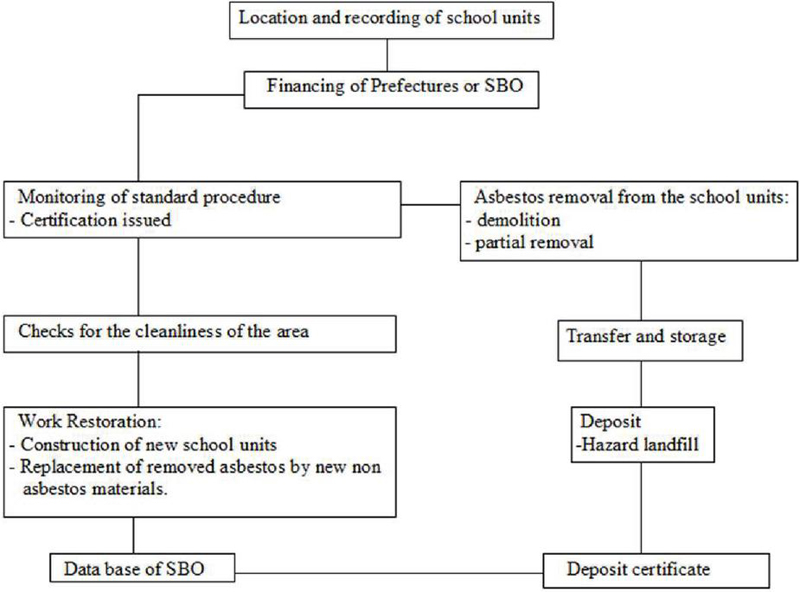
Figure 2 The diagram depicts asbestos management in school units in Greece.
The research has unveiled the following methodology (Figure 2):
• Prefectures finance the commissioning and monitoring of asbestos inspection in school buildings.
Since 2005, the BI has provided grants to various prefectures and local authorities for the replacement of asbestos components in school units. By 2012, about 43,5 million euro had been granted (Figure 3) [37].
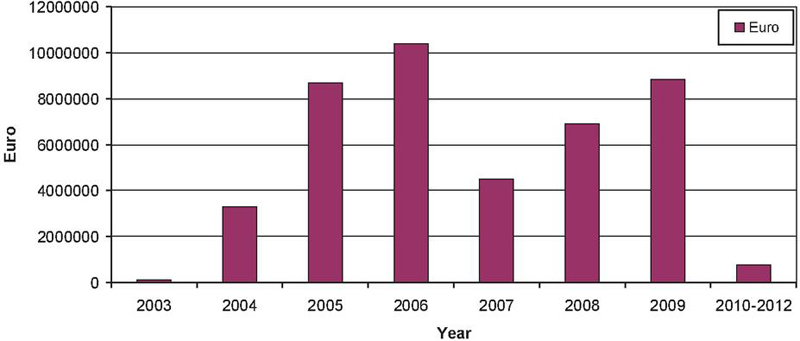
Figure 3 Financing for the replacement of asbestos, the demolition and the construction of new school units during the period of 2003–2012 [37].
The areas not funded for asbestos related issues are Argolida and Arta, due to the fact that the respective local authorities have not as yet reported any asbestos materials in their school units.
• Asbestos removal from the school units
The entire building is not torn down to its foundations but units containing asbestos materials are cleared one at a time. During the asbestos removal process a control is carried out to ascertain that the asbestos exposure is within safe limits for the workers as well as for the environment, and a sanitation certificate of the area is issued once the job is finished. The necessary samples to evaluate the safe limits of asbestos are taken by an authorized company (which has the necessary license and qualified staff).
A partial removal of asbestos has taken place in various school units on floors, walls, ceilings and ventilation shafts; only the parts that contained asbestos have been removed (Table 1).
Table 1 Projects of asbestos replacement in schools in the period 2003–2012 in Greece [30, 37]
| Schools Units were Found that | ||
| Contain Asbestos Materials | ||
| Region | Total Schools Units | Completed Works |
| East Macedonia & Thrace | 842 | 135 |
| Central Macedonia | 2464 | 109 |
| West Macedonia | 617 | 70 |
| Thessaly | 1409 | 53 |
| Epirus | 707 | 79 |
| Ionian islands | 376 | 64 |
| West Greece | 1274 | 44 |
| Central Greece | 1000 | 115 |
| Peloponnese | 990 | 34 |
| Attica | 3036 | 67 |
| North Aegean | 434 | 68 |
| South Aegean | 592 | 11 |
| Crete | 1039 | 109 |
| Total | 14780 | 961 |
Specifically in the area of Attica, 68 schools units were found to contain asbestos materials. The budget for this project of asbestos removal in schools amounts to 1,786,904 Euro (Table 2).
Table 2 Projects of asbestos replacement in schools in region of Attica [37]
| School Units | |
| Nursery | 20 |
| Secondary | 33 |
| High School | 15 |
| Total | 68 |
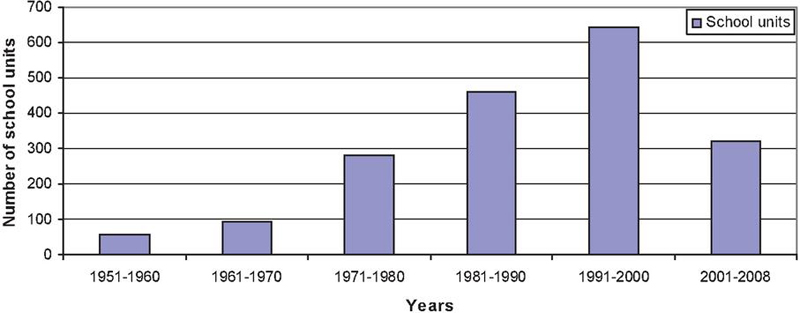
Figure 4 Construction of new school units during the period of 1941–2008 in Attica [37].
The research showed that schools in the Athens region containing asbestos elements had been built between 1956 and 2001. A great number of schools units were built in Attica throughout this period (Figure 4).
• Monitoring for standard procedure
The monitoring of formal procedures is supervised according to the norms set by the Municipality and the BI (prefecture information documents and certification procedures).
• Certification is issued by the company which is responsible for the removal of asbestos from the school units. This certificate testifies the absence of asbestos fibres in a specific area.
• Transfer and deposit of asbestos
The asbestos which is removed from school units is transferred in metal containers to storage areas for hazardous waste. Today, such areas are located in Athens and Thessaloniki. The waste is subsequently transferred to Germany (government contract) for its final deposit in approved hazardous waste landfills. The service in charge of the management for storage space is responsible for the asbestos transport. A certificate of delivery and a receipt are issued for the transfer of the asbestos and its reception at the final disposal area abroad.
• Checks for the sanitation of the area
Once the re-building work is completed, the central research unit of the Democritus Science Institute checks the area using technical means to test samples and verify that the units is asbestos-free.
• Work restoration of school units and removal of materials which contain asbestos.
The end result is that all asbestos materials have been removed and have been replaced by new asbestos-free materials.
When a demolition is required, a new school is built in order to cover the educational needs of the area.
5 Discussion
The current results show that many school units in all countries contain asbestos putting many teachers and students at risk. There is no complete data base with reference to school units that contain asbestos in any country. So far no research has estimated the total number of teachers and students exposed to asbestos nor the total number of those who have suffered asbestos-related health problems.
5.1 Facing the Asbestos Problem
In the United States and in Great Britain the asbestos issue began to be tackled in the 1970s. However, the management plans of the respective governments were not fully implemented and therefore the problems deriving from asbestos have increased in the last decades to the point that today they represent a serious social and environmental issue.
Greece, on the other hand, began implementing special programs only in 2004 when the asbestos issue had been made known to the general public.
In Greece the asbestos management in school units is in progress. The management follows the instructions of the Democritus Science Institute within the legislation framework of Greece and the European Union. The government objective to completely remove asbestos from school units involves an inspection of the remainder school units in order to check for any asbestos elements and finance the removal work. The programs for the removal of asbestos in Greece will be completed by 2020. This is feasible, provided that there is a continuous financial support for monitoring and removing asbestos materials.
In general terms it is clear that Greece intends proceeding to the total removal of asbestos from all schools, in contrast to the USA where, due to the great number of schools and the high cost, asbestos is removed only when it is not in good condition.
5.2 Asbestos Waste Management
Asbestos waste is transferred to approved landfills for the disposal of hazardous waste and must be handled and managed in accordance with all norms (Regulations and Ordinances).
Today in Greece hazardous waste is transferred abroad to specific areas which fill the criteria set by the EU legal framework, as there is no appropriate hazardous waste landfill in the country. Because of this, Greece is subject to an increase cost for transfer management, as well as a deposit cost, which can be of the order of 1.7 Euro per kilo when transferred and deposited in a hazardous waste landfill in Germany [37].
According to the EU Regulations 91/659/EEC [11] the ban on asbestos in the market as well as the restriction of products which contain asbestos fibers will contribute to the stabilization of asbestos use in each country.
6 Conclusions
The above research shows that it is impossible to give an accurate estimate of the population that may have come in contact with asbestos as there is no complete recording of school buildings that contain asbestos or of the condition of the materials that have asbestos.
Furthermore, the policies that have been developed for the overall asbestos management vary significantly around the world. In Greece, asbestos treatment is in progress and the complete removal of asbestos from many schools is a fact. However, an examination of all the schools in the country is required in order to check if they contain materials with asbestos and to proceed to their immediate replacement.
The research shows that asbestos management in Greece has been conducted according to national provisions and EU regulations for its removal, transfer and disposal. On the other hand, we cannot exclude the possibility that the asbestos materials have been buried in landfills for non-hazardous waste in the past and for that reason a re-examination of all landfills is essential. The official department in charge of this is the Department of the Environment. The existing mandatory requirements for asbestos management in schools at all stages not only protect the teachers and education staff but also the environment.
We conclude that the problem of asbestos has not been fully dealt with. The countries that have policies on asbestos management and its maintenance are obliged to carry out regular checks. However, the countries that choose the gradual removal of asbestos must rely on a significant financial budget for its safe management.
References
[1] EC (European Communities) (1999). Commission Directive 1999/77/EC of 26 July 1999, Adapting to technical progress for the sixth time Annex I to Council Directive 76/769/EEC on the approximation of the laws, regulations and administrative provisions of the Member States relating to restrictions on the marketing and use of certain dangerous substances and preparations (asbestos), OJ L207, Brussels, pp. 18–21.
[2] Suzuki Y., Yuen S.R., Ashhey R. (2005). Short, thin asbestos fibers contribute to the development of human malignant mesothelioma: pathological evidence., J. ijhen;208:201–210, doi: 10.1016/j.ijheh.2005.01.015.
[3] EASHW (European Agency for Safety and Health at Work) (2004). Asbestos in construction. Belgium, facts 51, issn 1681-2123, pp. 1–2.
[4] Pesch B., Taeger D., Johnen G., Gross I, Weber D, Gube M., Müller-Lux A., EHeinze. E, Wiethege Th., Neumann, V., Tannapfel A, Raithel H-J., Brüning Th., Kraus Th. (2009). Cancer mortality in a surveillance cohort of German males formerly exposed to asbestos, J. ijhen, 213:45–51, doi: 10.1016/j.ijhen.2009.09.001.
[5] US Geological Survey (2009). World Asbestos Consumption from 2003 through 2007, 2009. USA, pp. 1–7. Available from: http://minerals.usgs.gov/minerals/pubs/mcs/2009/mcs2009.pdf.
[6] EC (European Communities) (1976). Council Directive 76/769/EEC of 27 July 1976 on the approximation of the laws, regulations and administrative provisions of the Member States relating to restrictions on the marketing and use of certain dangerous substances and preparations, OJ L262, Brussels, pp. 201–203.
[7] OJH (Official Journal of the Hellenic Republic) (1983). 166/A/17.11.1983, pp. 2469–2471. Available from: http://www.et.gr/search\_publication.
[8] EC (European Communities) (1985). Council Directive 85/610/EEC of 20 December 1985 amending for the seventh time (asbestos) Directive 76/769/EEC on the approximation of the laws, regulations and administrative provisions of the Members States relating to restrictions on the marketing and use of certain dangerous substances and preparations, OJ L375, Brussels, pp. 1–2.
[9] EC (European Communities) (1987). Council Directive 87/217/EEC of 19 March 1987 on the prevention and reduction of environmental pollution by asbestos, OJ L085, Brussels, pp. 40–45.
[10] EC (European Communities) (1989). Council Directive 89/678/EEC of 21 December 1989 amending directive 76/769/EEC on the approximation of the laws, regulations and administrative provisions of the member states relating to restrictions on the marketing and use of certain dangerous substances and preparations, OJ L398, Brussels, pp. 24.
[11] EC (European Communities) (1991). Commission Directive 91/659/EEC of 3 December 1991 adapting to technical progress Annex I to Council Directive 76/769/EEC on the approximation of the laws, regulations and administrative provisions of the Member States relating to restrictions on the marketing and use of certain dangerous substances and preparations (asbestos), OJ L363, Brussels, pp. 36–38.
[12] EC (European Communities) (1999a). Commission Directive 1999/43/EC of the European Parliament and of the Council of 25 May 1999 amending for the 17th time Directive 76/769/EEC on the approximation of the laws, regulations and administrative provisions of the Member States relating to restrictions on the marketing and use of certain dangerous substances and preparations, OJ L166, Brussels, pp. 87–90.
[13] EC (European Communities) (1999b). Commission Directive 1999/77/EC of 26 July 1999 adapting to technical progress for the sixth time Annex I to Council Directive 76/769/EEC on the approximation of the laws, regulations and administrative provisions of the Member States relating to restrictions on the marketing and use of certain dangerous substances and preparations (asbestos), OJ L207, Brussels, pp. 18–21.
[14] EC (European Communities) (1983a). Council Directive 83/477/EEC of 19 September 1983 on the protection of workers from the risks related to exposure to asbestos at work (second individual Directive within the meaning of Article 8 of Directive 80/1107/EEC), OJ L263, Brussels, pp. 25–32.
[15] EC (European Communities) (1991a), Council Directive 91/382/EEC of 25 June 1991 amending Directive 83/477/EEC on the protection of workers from the risk related to exposure to asbestos at work (second individual Directive within the meaning of Article 8 of Directive 80/1107/EEC), OJ L206, Brussels, pp. 16–18.
[16] EC (European Communities) (1993). Council Directive 83/478/EEC of 19 September 1983 amending for the fifth time (asbestos) Directive 76/769/EEC on the approximation of the laws, regulations and administrative provisions of the Member States relating to restrictions on the marketing and use of certain dangerous substances and preparations, OJ L263, Brussels, pp. 33–36.
[17] EC (European Communities) (1993a). Directive 93/98/EEC of 29 October 1993 harmonizing the term of protection of copyright and certain related rights, OJ L290, Brussels, pp. 9–13.
[18] EC (European Communities) (1993b). Council Regulation (EEC) No 259/93 of 1 February 1993 on the supervision and control of shipments of waste within, into and out of the European Community, OJ L30, Brussels, pp. 1–28.
[19] EC (European Communities) (1997). Council Regulation (EC) No 120/97 of 20 January 1997 amending Regulation (EC) No 259/93 on the supervision and control of shipments of waste within, into and out of the European Community, OJ L022, Brussels, pp. 14–15.
[20] EC (European Communities) (1997a). Council Decision 97/640/EC of 22 September 1997 on the approval, on behalf of the Community, of the amendment to the Convention on the control of Tran boundary movements of hazardous wastes and theirs disposal (Basle Convention), as laid down in Decision III/1 of the Conference of the Parties, OJ L272, Brussels, pp. 45–46.
[21] EC (European Communities) (2006). Council Directive 2006/12/EC of the European Parliament and of the Council of 5 April 2006, Brussels, OJ L114, pp. 9–21.
[22] EC (European Communities) (1991b). Council Directive 91/156/EEC of 18 March 1991 amending Directive 75/442/EEC on waste, OJ L078, Brussels, pp. 32–37.
[23] EC (European Communities) (1999c). Council Directive 1999/31/EC of 26 April 1999 on the landfill of waste, OJ L182, Brussels, pp. 1–19.
[24] EC (European Communities) (2003). Council Decision 2003/33/EC of 19 December 2002 establishing criteria and procedures for the acceptance of waste at landfills pursuant to Article 16 of and Annex II to Directive 1999/31/EC, OJ L11, Brussels, pp. 27–49.
[25] EC (European Communities), (1991c). Council Directive 91/689/EEC of 12 December 1991 on Hazardous waste, OJ L337, Brussels, pp. 20–27.
[26] EC (European Communities) (1975). Council Directive 75/442/EEC of 15 July 1975 on Waste, OJ L194, Brussels, pp. 39–41.
[27] EC (European Communities) (2006a). European Commission, A practical guide on best practice to prevent or minimize asbestos risks in wok that involves (or may involve) asbestos: for the employer, the workers and the labour inspector, A non-binding guide to best practice. Senior Labour Inspectors Committee (SLIC). Employment Social Affairs and Equal Opportunities, DG, Health, Safety and Hygiene at work, Luxemburg, pp. 120–121.
[28] OJH (Official Journal of the Hellenic Republic) (1991). 138/B/08.03.1991, pp. 1111–1115. Available from: http://www.et.gr/search\_publication.
[29] OJH (Official Journal of the Hellenic Republic) (1988). 31/A/17.02.1988, pp. 263–269. Available from: http://www.et.gr/search\_publication.
[30] CER Centre for Educational Research (2007). Statistics School Data Units 2005–2006, Athens.
[31] OJH (Official Journal of the Hellenic Republic) (2006). 791/B/30.06.2006, pp. 11133–11208. Available from: http://www.et.gr/search\_publication.
[32] MEPPPW (Ministry of the Environment Physical Planning and Public Works) (2005). Structure of the Administrative Waste Projects submitted by the industries, Circular oik.132496/3628, Athens, pp. 1–3.
[33] USEPA (United States Environmental Protection Agency) (2003). The ABCs of Asbestos in Schools, Office of Pollution Prevention and Toxics, EPA-745-K93-017, USA, pp:1–20.
[34] US Office of Education (1982). Digest of Educational Statistics, Washigton, DC, USOE, 13.
[35] Irving KF, Alexander RG, Bavley H. (1980). Asbestos exposures in Massachusetts public schools. Am Ind Hyg Assoc J, 41:270–276.
[36] HSE (Health and Safety Executive) (2006). Asbestos in System Buildings Control of Asbestos Regulations, Guidance for duty holders, UK, pp. 8–9.
[37] BI (Building Infrastructures (BI) S.A. (2013). Works Progress Project – Financing– Absorption, Athens, pp. 1–3.
[38] OJH (Official Journal of the Hellenic Republic) (2007). 287/B/02.03.2007, pp. 7089–7116. Available from: http://www.et.gr/search\_publication.
[39] EC (European Communities) (1993). Commission Regulation (EC) No 2408/98 of 6 November 1998 amending Annex V to Council Regulation (EEC) No 259/93 on the supervision and control of shipments of waste within, into and out of the European Community, OJ L298, Brussels, pp. 19–41.
Biographies

Agisilaos Economou is an Environmentalist. He holds a BA in Environmental Studies from the University of the Aegean, an MA in Architecture of Space, a Ph.D. and a Postdoc in Spatial and Urban Planning from the School of Architecture of the National Technical University of Athens (NTUA) and a Postdoc in Environmental Ethics from the School of Applied Mathematical & Physical Sciences of NTUA. His research areas include Environmental management, European Policies, Circular Economy, Spatial and Urban Planning and technical law. He teaches at Universities and he is serving as a reviewer for highly-respected journals.

Roido Mitoula is Professor at Harokopio University of Athens. She holds a BA in “Political Sciences and Public Administration” from National Kapodistriako University of Athens, an MA in “Architecture of Space” and a Ph.D in “Urban Planning and Spatial Design” from N.T.U.A. She has scientific publications and has participated in numerous Greek and international Conferences. She is researcher in the Laboratory of Applied Economics and Sustainable Development of Harokopio University and she co-operated with the Laboratory of Urban Design of N.T.U.A. She specialises in issues of “Sustainable Development”.
He was Head of the Department of Home Economics and Ecology from November 2015 to November 2017. She is Editor of Sustainable Development, Culture, Traditions Journal (SDCT-Journal www.sdct-journal.com) (ISSN 2241-4010) and Editor of Greek Journal “B A, , , O, Ko (www.sdct-journal.gr) (ISSN 2241-4002). She is a member of the Committee of the Graduate Program “Sustainable Development” of Harokopio University and is responsible for the “Local Development”. She is a member of Scientific Committees and reviewer in scientific journals and Conferences. She has organized Scientific Seminars, Scientific Conferences and Scientific Meetings on Urban Environment and Regional Development. She is the national representative of Greece in European Union programs related to Sustainable Development.
Strategic Planning for Energy and the Environment, Vol. 44_4, 755–772.
doi: 10.13052/spee1048-5236.4445
© 2025 River Publishers