Insights Into the ‘Landscape Perspective’: Unravelling the Spatio-temporal Distribution of Farm Stays in Italy as a Contribution to Rural Tourism Analysis
Christian Bello1 and Ioannis Konaxis2,*
1Undergraduate student at Sapienza University of Rome, Faculty of Economics, Italy
2Department of tourism studies, University of Piraeus, Karaoli & Dimitriou 80, EL-18534 Piraeus, Greece
E-mail: bello.2197365@studenti.uniroma1.it; ikonaxis@unipi.gr
*Corresponding Author
Received 12 June 2025; Accepted 07 July 2025
Abstract
By combining hospitality with traditional farming to promote sustainable economic diversification, farm stay has emerged as a pivotal element in the rural development of Southern Europe. Based on this assumption, we have investigated the spatio-temporal evolution of farm stay across Italy between 2003 and 2023, highlighting regional differences and the underlying drivers of growth and change. The study specifically explores the socioeconomic, environmental, and political factors shaping spatial distribution (and temporal patterns) of farm stays in Italy, taken as both a response to changing tourism preferences and a proactive strategy toward rural resilience. The study identifies Tuscany and Trentino-Alto Adige as regional leaders because of strong cultural assets, environmental appeal, and robust infrastructure leading to high accessibility from the largest metropolitan regions of Italy. Meanwhile, regions such as Molise and Aosta Valley, often constrained by geographic isolation, weak policy support and demographic decline, continue to exhibit low farm stay density – despite the increasing tourism potential. The recent expansion and consolidation of farm stays in Southern Italy, and especially in Apulia and Sicily, is also noteworthy, and may reflect successful rural revitalization strategies and investment in sustainable tourism. The empirical findings of this study definitely underscore farm stay’s potential to reinforce local identity, support small-scale agriculture, and contribute to territorial cohesion in Mediterranean Europe.
Keywords: Farm stay, rural development, tourism infrastructure, mapping, mediterranean region.
Introduction
Tourism plays a vital role in rural development worldwide by stimulating local economies, creating jobs, and preserving cultural and natural heritage. In Europe, rural tourism has become an important tool for revitalizing remote areas facing demographic and economic decline. Particularly in regions like the Mediterranean basin, tourism offers opportunities to diversify income sources, support traditional industries such as agriculture and crafts, and promote sustainable practices. By attracting visitors through rich, attractive and diversified landscapes, history, gastronomy and local cultures, rural tourism fosters social cohesion and encourages the preservation of unique regional identities. Under such perspectives, farm stay has increasingly become a cornerstone of rural and tourism development strategy in Mediterranean Europe, positioning itself at the intersection of agriculture, cultural heritage, and sustainable travel (Sharpley, 2002; Fagioli et al., 2014; Almeida-Garcia et al., 2025).
Defined broadly as a form of tourism carried out within active farms, farm stay provides visitors with immersive experiences tied to agricultural life, including lodging, meals prepared with local product, and even hands-on participation in farm activities (Salvati and Zitti, 2005; Giannakis et al., 2014; Arjona-Fuentes et al., 2017). Its dual capacity to enhance farm income and enrich the ‘rural tourism portfolio’ makes it a valuable tool for territorial development all over Europe (Ploeg and Roep, 2003; Salvati and Carlucci, 2011; Kosmas et al., 2015). In the Mediterranean context, where regional identity, landscape, and gastronomy, hold strong cultural and economic value, farm stay presents a unique opportunity to link tradition with innovation (Sallustio et al., 2018; Ivona et al., 2021; Vardopoulos et al., 2021).
In Italy, the institutionalization of farm stay began with Law No. 730/1985 and was solidified by Law No. 96/2006. These legislative milestones not only established a regulatory framework, but also created a platform for farmers, to diversify their income streams through tourism without abandoning their primary agricultural functions (e.g. Quaranta et al., 2020). From the early 2000s, Italy witnessed a surge in farm stay activities, with initial concentrations in central regions like Tuscany and Umbria. These areas leveraged their pre-existing tourism infrastructure, historical landscapes, and culinary reputations to quickly establish themselves as farm stay hubs (sensu Gonen, 1981; Bazin and Roux, 1995; Fons et al., 2011). Over the subsequent two decades, such a growth trajectory extended to both Northern and Southern Italy, and reflected a sudden expansion in the types of services offered – from accommodation to restaurant and tasting experiences (Cimini et al., 2013; Wilson et al., 2017; Mejjad et al., 2022). Based on these premises, the present study specifically investigates the socioeconomic, environmental, and political factors shaping spatial distribution (and temporal patterns) of farm stay in Italy, taken as both a response to changing tourist preferences and a proactive strategy toward rural resilience.
Logical Framework, Study Area and Methodology
Today, farm stay in Italy is not merely an ancillary agricultural activity, representing instead a dynamic and evolving sector that reflects broader societal shifts toward sustainability, experiential travel, and cultural reconnection (e.g. Salvati et al., 2012; Ferrara et al., 2016, 2017). Assuming this broad disciplinary perspective, the present study provides a detailed examination of the evolution of farm stay in Italy, analysing spatial distribution, regional disparities, and the multifaceted drivers of growth over time. We made extensive use of (census and survey) statistical variables and indicators released by Italian National Institute of Statistics (ISTAT) at different operational dates. A national geographical coverage was adopted in this study, making use of spatially disaggregated density indicators at provincial and municipal scale in Italy (respectively NUTS-3 and LAU-1 level of Eurostat territorial nomenclature). In doing so, the study definitely contributes to a nuanced understanding of farm stay assumed as an economic strategy and, together, a cultural phenomenon.
Empirical Results
Descriptive analysis and mapping of basic variables have provided a visual representation of how farm stays’ density has progressively increased across Italian provinces over time. From the outset, regions such as Tuscany and Umbria stand out as areas with a significant presence of farm stays facilities, reflecting their long-standing traditions in rural hospitality, cultural tourism, and agricultural diversification. In subsequent stages, this initial concentration expands considerably, both in terms of intensity and geographic distribution.
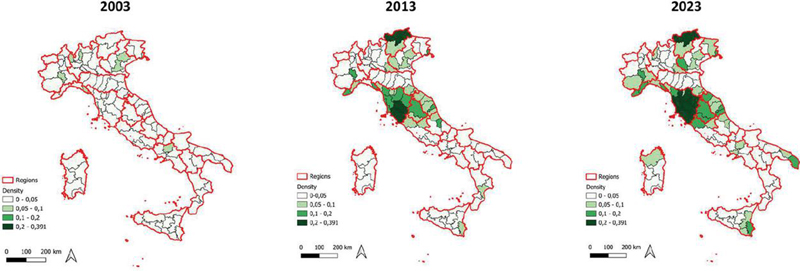
Figure 1 A summary representation of the spatio-temporal dynamics of farm stays in Italian provinces (NUTS-3 Eurostat level) using the density (per square km) of accommodation licenses from aggregated data released by Italian National Statistical Institute (Istat).
Mapping Farm Stays in Italy: A Descriptive View
What specifically emerges from empirical analysis and mapping is a gradual but consistent growth in farm stays’ activity across much of the country. Northern regions – including Trentino-Alto Adige, Veneto, and Emilia-Romagna – exhibit a marked increase in density, suggesting a wider adoption of farm stays as a complementary economic activity within rural areas. In Southern Italy, areas that have been initially less involved, such as Puglia and Sardinia, also showed a significant upward trend, indicating a broader national engagement with this form of sustainable tourism (Figure 1). The most densely populated areas are typically those with rural, hilly, or mountainous characteristics, highlighting a clear preference for landscapes that offer natural beauty, cultural heritage, and local experience. Urban centres and coastal zones, by contrast, tend to show lower densities, with some exceptions in rural inland territories adjacent to the sea coast. Overall, empirical data suggests that farm stays in Italy have evolved from a spatially concentrated phenomenon into a widespread and dynamic component of rural development. This growth reflects changing tourist preferences toward experiential and environmentally conscious travel, as well as the increasing willingness of agricultural enterprises to diversify their services. Farm stays now play a vital role in promoting regional identity, preserving rural landscapes, and contributing to the socioeconomic resilience of local communities.
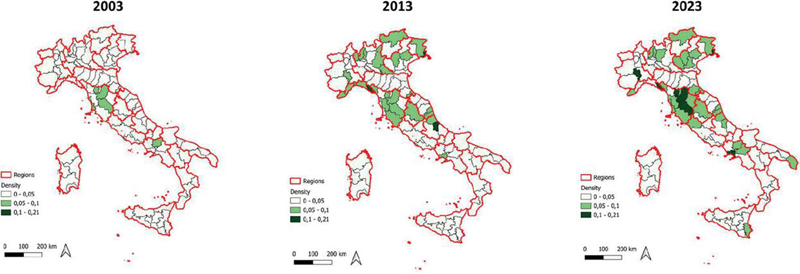
Figure 2 A summary representation of the spatio-temporal dynamics of farm stays with restoration license in Italian provinces (NUTS-3 Eurostat level) using the density (per square km) of accommodation licenses from aggregated data released by Italian National Statistical Institute (Istat).
Figure 2 illustrates the evolution of farm stays in Italy that are specifically licensed to offer restaurant services. Over time, there is a visible increase in both the number and spatial distribution of these farm stay structures across the country. In the left map (2003), their presence was quite limited and concentrated in just a few areas, most notably in Central Italy, with regions such as Tuscany and Umbria showing the highest densities. This likely reflects the strong local traditions in food culture and farm-to-table practices that were (and still are) deeply embedded in these territories. As we move to the second and third maps, a progressive expansion becomes evident. More municipalities, especially in Northern and Central regions such as Emilia-Romagna, Veneto, and parts of Lombardy, begin to display higher densities of farms stays offering restaurant services. This suggests not only a growing demand for rural dining experiences but also a diversification strategy enhancing the economic sustainability of farms through tourism and gastronomy.
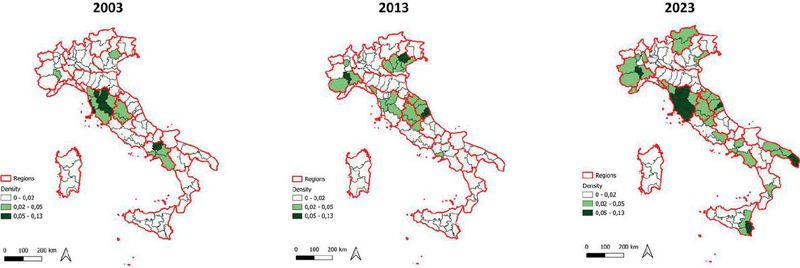
Figure 3 A summary representation of the spatio-temporal dynamics of farm stays with tasting license in Italian provinces (NUTS-3 Eurostat level) using the density (per square km) of accommodation licenses from aggregated data released by Italian National Statistical Institute (Istat).
Southern regions, while still showing relatively low overall densities, begin to emerge in 2013 and, more specifically, in 2023: selected areas of Sardinia, Apulia, and Campania showed a noticeable presence of farm stays. This indicates a broader national trend toward integrating food services within the farm stays’ sector, aligned with both cultural heritage and regional development policies. In general, the areas with the highest densities of farm stays tend to be rural and hilly, reflecting the preference of visitors for authentic culinary experiences in scenic, traditional landscapes. The growing presence of restaurant-licensed farm stays is not only a reflection of tourist interest, but also a sign of how agriculture is being reimagined as a multifunctional activity – combining food production, hospitality, and the promotion of local culture. This evolution has positioned farm stays as a key player in sustainable rural development and the enhancement of Italy’s gastronomic identity.
Figure 3 illustrates the evolution of farm stays’ facilities that are specifically licensed to offer tasting services in Italy. Over time, a clear increase in the number of such establishments, and a more homogeneous distribution across the national territory, has been observed. This trend reflects broader changes in rural tourism dynamics, particularly the rising demand for authentic, experience-based offerings connected to local food and wine traditions. In the left map, the presence of tasting-licensed farm stays is relatively limited and highly concentrated, primarily in central Italy. Regions such as Tuscany and Umbria exhibit the highest densities, likely because of well-established reputations for quality wine and olive oil production, and a longstanding culture of food-centred rural hospitality. This initial pattern highlights how (a deeply rooted) gastronomic heritage can act as a driving force in the early development of rural services. As we progress to the intermediate and right maps, empirical data show a progressive geographic expansion of these establishments. The Northern regions, including Piedmont, Emilia-Romagna, and Lombardy, begin to show medium-to-high densities, suggesting a strategic shift in farm activities toward tourism and direct consumer engagement. At the same time, there is a growing presence in Central-Southern areas, particularly in regions such as Abruzzo, Molise, and (later) Apulia and Campania, where traditional agricultural landscapes have been progressively revitalized through food-related tourism services. This temporal progression indicates a broader national trend: more farms are integrating tasting services as part of a diversification strategy increasing resilience and, together, income opportunities. The expansion of tasting-licensed facilities corresponds not only to growing tourist interest in local food culture, but also to policy incentives and institutional support promoting rural development and gastronomic identity.
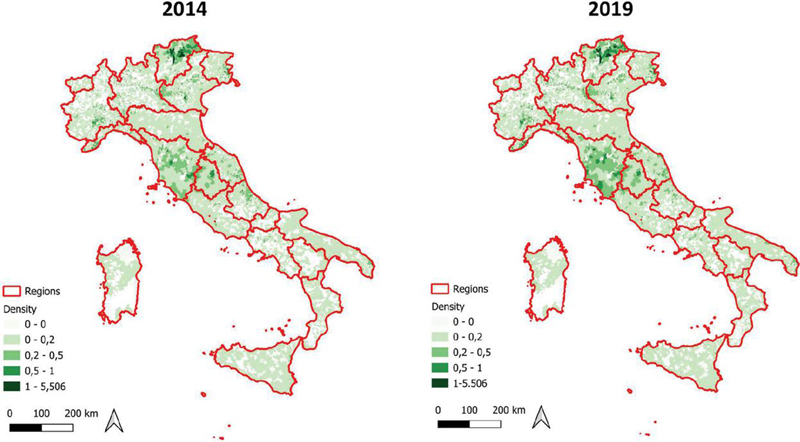
Figure 4 Spatial distribution of farm stays in Italian municipalities (LAU-1 Eurostat level) using the density (per square km) of accommodation licenses from aggregated data released by Italian National Statistical Institute (Istat); selected years.
Mapping Farm Stays in Italy: A Refined, Local-scale Analysis
Figure 4 illustrates the evolution of the overall distribution of facilities across Italian municipalities over the last five years before Covid-19 pandemic (2014–2019). Absolute data were elaborated as facilities’ density, with a graduated colour scale ranging from very low (white and light green) to very high (dark green) density, allowing for a detailed visual assessment of the spatial patterns and their temporal shifts. In the left map, which represents the earlier development phase, facilities were observed across much of the Italian territory. However, their distribution was concentrated in certain regions, particularly in Central Italy, including Tuscany, Umbria, and parts of Marche and Latium. These areas show medium-to-high densities, indicating that they have historically been among the most developed zones for rural tourism. This concentration likely reflects the combination of a rich agricultural tradition, strong cultural appeal, and early policy incentives that have supported (and possibly still support) local development processes in such regions. Other districts showing moderate density include parts of Northern Italy, such as the Apennines in Emilia Romagna and certain Alpine regions in Trentino-Alto Adige and Lombardy, where mountain tourism and rural hospitality have coexisted for a relatively long time. In contrast, Southern Italy and the islands, particularly Sardinia and Calabria, display a much sparser distribution of economic activities in this initial stage, pointing to a slower start in integrating tourism within the rural economy.
The right map reveals a clear expansion and intensification of farm stays across the country. The most notable changes include(i) a substantial increase in farm stays’ density in Northern regions, particularly in Veneto, Trentino-Alto Adige, and Lombardy. This trend suggests a growing diversification of agricultural enterprises in these areas, often paired with the development of local food and wine tourism; (ii) a consolidation of central Italy’s role as the core of farm stays in Italy, with Tuscany maintaining the highest overall density levels, as expected in front of past dynamics; and, finally, (iii) the emergence of new areas of activity in Southern Italy, because of increasing awareness of rural development strategies in less traditional tourism destinations, often supported by national and European funding mechanisms.
Exploring Temporal Patterns and Short-term (Regional) Dynamics
The evolution of farm stays in Italy was assumed as an evenly distributed phenomenon, expanding from its original strongholds in Central Italy to a broader national coverage. The growing density of facilities across rural and semi-rural areas points to a structural transformation of the agricultural sector, with many farms turning to multifunctional models that integrate tourism, hospitality, and educational (or recreational) services. These developments are also aligned with changing tourism preferences, as more visitors seek authentic, nature-based, and culturally rich experiences that are uniquely positioned to offer. The growth in farm stays can thus be interpreted as both a response to external demand and a proactive strategy by rural communities to enhance economic resilience, give value to local resources, and preserve traditional landscapes and practices. The analysis underscores an increasing significance in Italy’s rural economy. From a geographically limited activity, it has developed into a widespread and dynamic sector, contributing not only to the diversification of agricultural income but also to sustainable rural development and regional cohesion.
Across Italy, the highest farm stays’ densities have been consistently recorded in Trentino-Alto Adige/South Tyrol and Tuscany, both regions with strong tourism infrastructures and traditions. Their figures – approaching 0.25 and 0.22 respectively – place them far ahead of other regions. At the opposite end of the spectrum, Molise, Aosta Valley, and Friuli-Venezia Giulia have struggled to develop a substantial farm stays’ presence. These low levels may be due to geographical, infrastructural, or economic constraints. In terms of growth rate, Liguria, Apulia, and Sicily demonstrated particularly dynamic development paths, showing that even the regions without a historical dominance in farm stay can rapidly catch up with strategic planning and investment (Figure 5).
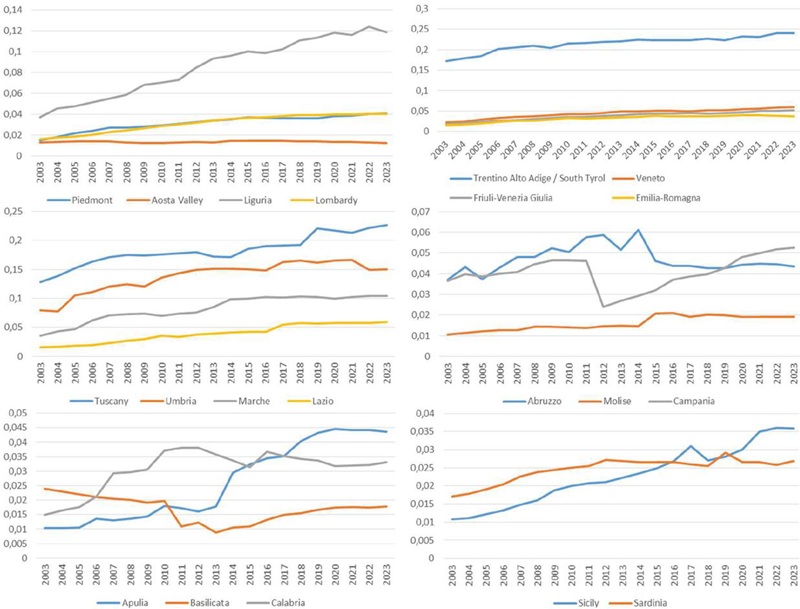
Figure 5 The evolution over time of farm stays in Italian regions (NUTS-2 Eurostat level) using the density (per square km) of accommodation licenses from aggregated data released by Italian National Statistical Institute (Istat); upper panel, left: North-Western Italy; upper panel, right: North-Eastern Italy; middle panel, left: Central Italy; middle panel, right: Central-Southern Italy; lower panel, left: Southern Italy; lower panel, right: Islands.
The six charts illustrated above provide a comprehensive overview of the evolution of farm stays’ density across Italy’s macro-regions – Northwest, Northeast, Central, South, and Islands – over a 20-year period. A closer look at each district reveals notable differences in performance, growth dynamics, and regional leadership in the farm stays’ sector. In the Northwest, Liguria stands out as the undisputed leader in farm stays. From a modest starting point in 2003, the region experienced steady and impressive growth, reaching values above 0.13 by 2023. This strong performance suggests significant investments in rural tourism and a well-established farm stays’ network. On the opposite side, Aosta Valley consistently registered the lowest density in the region, hovering below 0.02 for the entire study period. Despite its picturesque Alpine setting, farm stays appear to play a minor role in the regional economy. Piedmont and Lombardy, meanwhile, maintained a modest but consistent trajectory. Both regions saw gradual increases, converging around 0.04 by 2023. Their stable growth suggests sustained, if not booming, interest in farm stays.
Northeast Italy features the region with the highest farm stays’ density in the country, namely Trentino-Alto Adige/South Tyrol. With a starting value near 0.17 in 2003 and a steady climb to 0.25 by 2023, it showcases a deeply rooted rural tourism tradition, supported by a mix of Alpine charm and high-quality services. In contrast, Friuli-Venezia Giulia displayed the lowest density in this cluster, remaining under 0.04 across the two decades. Emilia-Romagna and Veneto followed similar patterns of moderate but sustained growth, closing the period slightly above 0.05. While they do not match Trentino’s figures, their performance reflects robust regional tourism policies. Central Italy is home to another farm stays’ powerhouse – Tuscany. Renowned for its countryside and food culture, Tuscany saw its density rise from 0.12 in 2003 to over 0.22 by 2023, solidifying its role as a leader in rural tourism. Umbria also experienced notable growth, reaching around 0.15. However, a slight decline in the last few years suggests potential stagnation, or even saturation. Marche showed solid progress, particularly after 2010, while Latium remained the least developed in this context, ending just above 0.05. This district overall shows high engagement with farm stays, with all administrative regions posting substantial growth.
On the islands, the trends shifted drastically over time. Sardinia began with a higher farm stays’ density and maintained this lead until around 2020, when Sicily began to accelerate. By 2023, Sicily had overtaken Sardinia, closing at just over 0.03. Sardinia’s growth plateaued in the past decade, while Sicily showed more dynamic development, especially from 2015 onward. The changing positions of these two regions highlight the growing momentum of farm stays in Sicily. Southern Italy finally shows the most uneven patterns. In the group including Abruzzo, Molise, and Campania, Abruzzo started strong and even led the group until 2012, when its figures began to decline. Meanwhile, Campania exhibited a steady and continuous rise, eventually surpassing Abruzzo. Molise remained the region with the lowest farm stays’ density not only within this group but across much of Italy, never exceeding 0.02. The other southern regions – Apulia, Basilicata, and Calabria – offer a different narrative. Apulia stands out for its remarkable rise starting in 2012, eventually reaching above 0.04 and emerging as a new leader in Southern Italy. Calabria also experienced fluctuations but remained substantially competitive. Basilicata, however, saw a notable drop between 2010 and 2013, followed by a modest recovery.
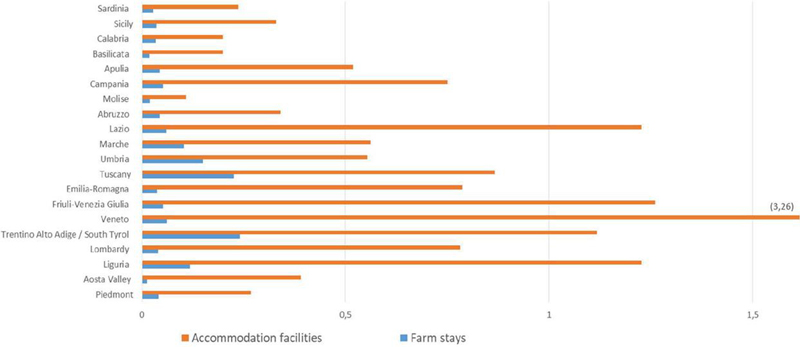
Figure 6 Comparison between the density (per square km) of traditional tourism accommodation facilities and farm stays in Italian regions (2023) from official statistics (Istat).
‘Traditional’ Tourism and ‘Rural’ Tourism in Italy: Two Different Geographies?
The combined analysis of bar charts and thematic maps reveals significant territorial dynamics in the distribution of accommodation facilities (total tourism capacity) and farm stays across Italy. A striking observation is the strong concentration of traditional accommodation structures (such as hotels, bed & breakfast, campsites, and other minor facilities) in Northern and Central regions of Italy (Figure 6); Veneto stand out clearly with a density exceeding 3.26, as indicated by the darkest blue shading on the map. This concentration can be attributed to the strong tourism appeal of the region, driven by cities like Venice and Verona, Adriatic sea coastal resorts, and a well-established hospitality infrastructure (Figure 7). Tuscany, Emilia-Romagna, and Trentino-Alto Adige (South Tyrol) also show high densities of accommodation. In particular, Trentino-Alto Adige features high densities in both accommodation facilities and farm stays, a result of its well-integrated model of Alpine, cultural, and winter tourism. The regional tradition of family-run businesses and a strong emphasis on local products contributed largely to shape this trend. Its development fits naturally into a mountain context that prioritizes sustainability and local identity.
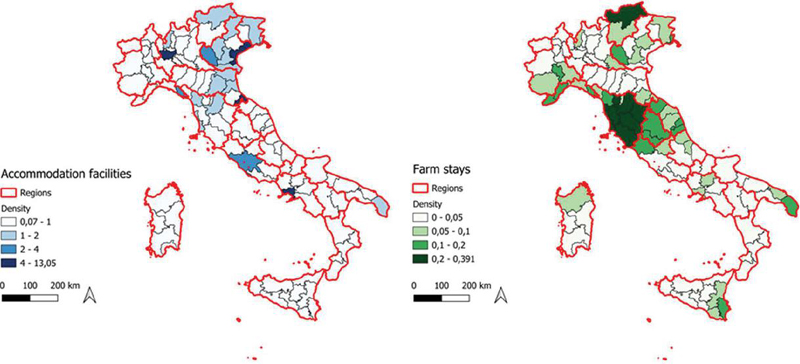
Figure 7 Comparison between the spatial distribution of traditional tourism accommodation facilities and farm stays (using density per square km) in Italian provinces (2023) from official statistics (Istat).
With this perspective in mind, one noteworthy case is Tuscany, which dominates the farm stays’ sector. It shows the highest density of farm stays in the country, as clearly illustrated by the darkest green on the relevant map. This reflects a regional strategy focused on promoting rural landscapes, food and wine culture, and widespread historical heritage – even in small, off-the-beaten-path towns. Tuscany has successfully combined agricultural activity with tourism, offering authentic and sustainable experiences that appeal to visitors interested in nature and local culture. In contrast, Southern Italy generally displays lower values in both categories. However, there are important exceptions – Apulia, in particular, stands out with a relatively higher density of traditional accommodation facilities compared with other Southern regions like Basilicata or Molise. Regions like Campania and Latium also show a significant density of traditional accommodations. However, Latium, despite the global appeal of Rome, the capital city of Italy, shows a much lower density of farm stays. This suggests that urban tourism does not necessarily correlate with rural hospitality development. In conclusion, Northern and Central Italy lead in terms of both number and density of accommodation structures and farm stays, while the South, though showing signs of growth – especially in regions like Apulia and Campania – still displays a gap. The reasons behind these patterns are multifaceted, involving territorial attractiveness, infrastructure quality, tourism promotion policies, and long-standing integration of rural and hospitality sectors. The visual data from maps and graphs confirm the existence of strong regional differences in both tourism and hospitality landscape of Italy.
Discussion
By combining hospitality with traditional farming that may promote sustainable economic diversification, farm stays have emerged as pivotal elements in the rural development of Southern Europe (Lupi et al., 2017). Based on this assumption, we have investigated the spatio-temporal evolution of farm stays across Italy between 2003 and 2023, highlighting regional differences and the underlying drivers of growth and change. The study specifically explores the socioeconomic, environmental, and political factors shaping spatial distribution (and temporal patterns) of farm stays in Italy, taken as both a response to changing tourist preferences and a proactive strategy toward rural resilience (Barbieri, 2010). The empirical analysis identifies Tuscany and Trentino-Alto Adige as regional leaders because of strong cultural assets, environmental appeal, and robust infrastructure leading to high accessibility from the largest metropolitan regions of Italy (Coluzzi et al., 2022). Meanwhile, regions such as Molise and Aosta Valley, often constrained by geographic isolation, weak policy support, and demographic decline, continue to exhibit low farm stays’ density (Del Prete and Zumpano, 2019). The recent expansion and consolidation of farm stays in Southern Italy, and especially in Apulia and Sicily, is noteworthy and may reflect successful rural revitalization strategies and investment in sustainable tourism (Prosperini, 2019).
A more detailed description of the geography of farm stays in Italy may delineate significant diversification and distinctive regional trajectories (e.g. Salvati and Zitti, 2008). A comparative analysis of Italian macro-regions – Northwest, Northeast, Central, South, and the Islands – reveals not only sharp differences in farm stays’ density but also in the pace and nature of its development. In Northern Italy, Trentino-Alto Adige/South Tyrol stands out as a leader, boasting the highest density of farm stays’ facilities by 2023. This success is rooted in a long-standing tradition of Alpine hospitality, the integration of high-quality agricultural production with tourism, and a governance model that consistently supports rural development (Fagioli et al., 2014; Mancino et al., 2016; Lupi et al., 2017). Liguria, with its coastal and mountainous landscapes, has seen a steep rise in farm stays, demonstrating how regional policies and marketing strategies can successfully value local assets (Del Prete and Zumpano, 2019). In contrast, Aosta Valley – despite its picturesque environment – remains among the regions with the lowest density, likely constrained by limited accessibility and a predominant focus on winter tourism (De Freitas, 2003; van der Ploeg and Roep, 2003; Galluzzo, 2018).
Central Italy continues to dominate the national farm stays’ scene, with Tuscany and Umbria serving as emblematic rural destinations. In Tuscany, the farm stays’ infrastructure is closely tied to its global brand, drawing on a unique blend of art cities, vineyards, and historical landscapes (Barbieri, 2010; Fagioli et al., 2014; Lupi et al., 2017). Umbria mirrors this model on a smaller scale, benefiting from its culinary reputation and proximity to Rome. Marche and Latium show more modest performance; Latium particularly highlights the disconnection between booming urban tourism and underdeveloped rural tourism sectors (Botezat, 2003; Colantoni et al., 2015; Galluzzo, 2018). Southern Italy presents a more heterogeneous picture. Apulia exemplifies rural revitalization success, with significant investment in infrastructure and effective regional branding that contributes to a vibrant farm stays’ sector (Wilson et al., 2001). In contrast, Molise continues to struggle due to demographic decline, poor connectivity, and limited institutional support (Alisauskas and Jankauskiene, 2008; Gascón, 2013; Piras and Pedes, 2025). Campania is experiencing steady growth, while Calabria’s uneven development highlights both the potential and fragility of farm stays in economically disadvantaged areas (Canoves et al., 2004). Basilicata, after a marked decline in the early 2010s, is now cautiously recovering, illustrating the importance of sustained political and financial support (Figueiredo, 2013).
Sardinia and Sicily offer a compelling case of contrasts. Sardinia, once a leader in farm stays, has seen a stagnating growth, while Sicily has rapidly advanced in recent years thanks to improved rural tourism strategies and infrastructure development (Privitera, 2010). This reversal demonstrates that even lagging regions can outperform others through focused and consistent policy efforts (Sharpley, 2002). Several key factors help explaining the regional disparities observed in this study, including socioeconomic infrastructure, political commitment, demographic trends, and access to financial resources – all playing crucial roles (e.g. van der Ploeg and Roep, 2003). Furthermore, changing consumer preferences toward sustainable and experience-based travel have significantly boosted the farm stays’ sector (Wilson et al., 2001; Lane and Kastenholz, 2015; Lupi et al., 2017). Travellers are increasingly seeking authentic rural experiences, and farm stays answer this demand with e.g. environmental education, cooking workshops, and landscape immersion (Skuras et al., 2006).
Regions with high farm stays’ density benefit from diversified offerings, strong territorial identity, and integrated governance frameworks (e.g. Alisauskas and Jankauskiene, 2008; Galluzzo, 2018; Piras and Pedes, 2025). Conversely, low-density areas are often hampered by structural weaknesses, poor visibility in tourism markets, and underdeveloped transportation and digital infrastructure (Hjalager, 2002). To conclude, farm stays in Italy present a complex, multi-layered development shaped by historical, cultural, and economic variables (Privitera, 2010). Its evolution reflects broader dynamics of rural resilience and regional inequality (Michalkó and Rátz, 2006). Bridging these disparities calls for coordinated approaches involving infrastructure development, policy incentives, capacity building, and strategic destination branding (Figueiredo, 2013). Only through such integrated efforts farm stays may thrive as a pillar of sustainable and inclusive rural development in Italy.
Concluding Remarks
The empirical findings of this study definitely underscore farm stays’ potential to reinforce local identity, support small-scale agriculture, and contribute to territorial cohesion in Mediterranean Europe. In this perspective, Italian farm stays have evolved from a niche activity into a cornerstone of economic diversification and cultural preservation of rural areas. While regions like Tuscany, Trentino-Alto Adige, and Apulia are benchmarks of success, others – such as Molise and Aosta Valley – lag behind due to structural and institutional barriers. The future of farm stay depends on effectively addressing these regional inequalities through targeted investment, improved infrastructure, and inclusive policy frameworks. In doing so, Italy can unlock the full potential of its rural landscapes and traditions, ensuring resilient and sustainable growth.
Acknowledgments
This work has been partly supported by the University of Piraeus Research Center.
References
Alisauskas, S., Jankauskiene, G. (2008). The Impact of Rural Tourism on the Development of Rural Areas. Management Theory and Studies for Rural Business and Infrastructure Development, 12(1), 16–23.
Almeida-García, F., Monserrat-Febrer, A., Cortés-Macías, R., Coll-Ramis, M.À. (2025). Touristification and Expansion of Short-Term Rentals in Mediterranean Destinations: The Case of Rural Areas. Land, 14(4), 881.
Arjona-Fuentes, J.M., Amador-Hidalgo, L. (2017). Olive oil tourism: Promoting rural development in Andalusia (Spain). Tourism Management Perspectives, 21, 100–108.
Barbieri, C. (2010). An Importance-Performance Analysis of the Motivations Behind Farm stay and Other Farm Enterprise Developments in Italy. Journal of Rural and Community Development, 5(1), 1–20.
Bazin, G., Roux, B. (1995). Resistance to marginalization in Mediterranean rural regions. Sociologia Ruralis, 35.
Botezat, E.A. (2003). The Role of Rural Tourism in the Development of Rural Areas. Economics of Agriculture, 50(1), 1–10.
Cánoves, G., Villarino, M., Priestley, G.K., Blanco, A. (2004). Rural tourism in Spain: an analysis of recent evolution. Geoforum, 35(6), 755–769.
Cimini D., Tomao A., Mattioli W., Barbati A., Corona P. (2013). Assessing impact of forest cover change dynamics on high nature value farmland under Mediterranean mountain landscape. Annals of Silvicultural Research, 37, 29–37.
Colantoni, A., Ferrara, C., Perini, L., Salvati, L. (2015). Assessing trends in climate aridity and vulnerability to soil degradation in Italy. Ecological Indicators, 48, 599–604.
Coluzzi, R., Bianchini, L., Egidi, G., Cudlin, P., Imbrenda, V., Salvati, L., Lanfredi, M. (2022). Density matters? Settlement expansion and land degradation in Peri-urban and rural districts of Italy. Environmental Impact Assessment Review, 92, 106703.
De Freitas, C.R. (2003). Tourism Climatology: Evaluating Environmental Information for Decision Making and Business Planning in the Recreation and Tourism Sector. International Journal of Biometeorology, 48(1), 45–54.
Del Prete, D., Zumpano, C. (2019). Rural Development Policies and the Role of Farm stay in Italy. Italian Journal of Agronomy, 14(1), 1–7.
Fagioli, F.F., Diotallevi, F., Ciani, A. (2014). Strengthening the Sustainability of Rural Areas: The Role of Rural Tourism and Farm stay. Rivista di Economia Agraria, 69(2), 155–169.
Ferrara, A., Kelly, C., Wilson, G.A., Nolè, A., Mancino, G., Bajocco, S., Salvati, L. (2016). Shaping the role of ‘fast’ and ‘slow’ drivers of change in forest-shrubland socio-ecological systems. Journal of Environmental Management, 169, 155–166.
Ferrara, C., Carlucci, M., Grigoriadis, E., Corona, P., Salvati, L. (2017). A comprehensive insight into the geography of forest cover in Italy: Exploring the importance of socioeconomic local contexts. Forest Policy and Economics, 75, 12–22.
Figueiredo, E. (2013). One Rural, Two Visions – Environmental Concerns and Rural Development in the Portuguese Press. Journal of Rural Studies, 32, 273–282.
Fons, M.V.S., Fierro, J.A.M., Patiño, M.G. (2011). Rural tourism: A sustainable alternative. Applied Energy, 88(2), 551–557.
Galluzzo, N. (2018). Analysis of Staying Time in Italian Farm stay Using a Quantitative Methodology: The Case of Latium Region. Journal of Rural Social Sciences, 33(1), 1–20.
Gascón, J. (2013). The Limitations of Community-Based Tourism as an Instrument of Development Cooperation: The Value of the Social Vocation of the Territory Concept. Journal of Sustainable Tourism, 21(5), 716–731.
Giannakis, E. (2014). The role of rural tourism on the development of rural areas: The case of Cyprus. Romanian Journal of Regional Science, 8(1).
Gonen, A. (1981). Tourism and coastal settlement processes in the Mediterranean region. Ekistics, 378–381.
Hjalager, A.M. (2002). Repairing Innovation Defectiveness in Tourism. Tourism Management, 23(5), 465–474.
Ivona, A., Rinella, A., Rinella, F., Epifani, F., Nocco, S. (2021). Resilient rural areas and tourism development paths: A comparison of case studies. Sustainability, 13(6), 3022.
Kosmas, C., Detsis, V., Karamesouti, M., Kounalaki, K., Vassiliou, P., Salvati, L. (2015). Exploring long-term impact of grazing management on land degradation in the socio-ecological system of Asteroussia Mountains, Greece. Land, 4(3), 541–559.
Lane, B., Kastenholz, E. (2015). Rural Tourism: The Evolution of Practice and Research Approaches – Towards a New Generation Concept? Journal of Sustainable Tourism, 23(8–9), 1133–1156.
Lupi, C., Giaccio, V., Mastronardi, L., Giannelli, A., Scardera, A. (2017). Exploring the features of Farm stay and its contribution to rural development in Italy. Land Use Policy, 64, 383–390.
Mancino, G., Nolè, A., Salvati, L., Ferrara, A. (2016). In-between forest expansion and cropland decline: A revised USLE model for soil erosion risk under land-use change in a Mediterranean region. Ecological Indicators, 71, 544–550.
Mejjad, N., Rossi, A., Pavel, A.B. (2022). The coastal tourism industry in the Mediterranean: A critical review of the socio-economic and environmental pressures and impacts. Tourism Management Perspectives, 44, 101007.
Michalkó, G., Rátz, T. (2006). The Mediterranean tourist milieu. Anatolia, 17(1), 93–109.
Piras, F., Pedes, F. (2025). The Impact of Socio-Economic Factors on the Development of Rural Tourism: Italian Case Based on a Regional Analysis. Tourism and Hospitality, 6(1), 3.
Privitera, D. (2010). The Importance of Organic Agriculture in the Development of Rural Tourism: The Case of Sicily. Tourism and Hospitality Management, 16(1), 25–34.
Prosperini, M. (2019). Farm stay and Rural Development: The Italian Experience. Agricultural Economics Review, 20(2), 5–16.
Quaranta, G., Salvia, R., Salvati, L., Paola, V. D., Coluzzi, R., Imbrenda, V., Simoniello, T. (2020). Long-term impacts of grazing management on land degradation in a rural community of Southern Italy: Depopulation matters. Land Degradation and Development, 31(16), 2379–2394.
Sallustio, L., Pettenella, D., Merlini, P., Romano, R., Salvati, L., Marchetti, M., Corona, P. (2018). Assessing the economic marginality of agricultural lands in Italy to support land use planning. Land Use Policy, 76, 526–534.
Salvati, L., Carlucci, M. (2011). The economic and environmental performances of rural districts in Italy: Are competitiveness and sustainability compatible targets? Ecological Economics, 70(12), 2446–2453.
Salvati, L., Perini, L., Sabbi, A., Bajocco, S. (2012). Climate aridity and land use changes: A regional-scale analysis. Geographical Research, 50(2), 193–203.
Salvati, L., Zitti, M. (2005). Land degradation in the Mediterranean basin: Linking bio-physical and economic factors into an ecological perspective. Biota, 6, 67–77.
Salvati, L., Zitti, M. (2008). Regional convergence of environmental variables: empirical evidences from land degradation. Ecological Economics, 68(1–2), 162–168.
Sharpley, R. (2002). Rural tourism and the challenge of tourism diversification: the case of Cyprus. Tourism Management, 23(3), 233–244.
Sharpley, R., Roberts, L. (2004). Rural Tourism – 10 Years On. International Journal of Tourism Research, 6(3), 119–124.
Skuras, D., Dimara, E., Petrou, A. (2006). Rural Tourism and Visitors’ Expenditures for Local Food Products. Regional Studies, 40(7), 769–779.
Van der Ploeg, J.D., Roep, D. (2003). Multifunctionality and Rural Development: The Actual Situation in Europe. In Multifunctional Agriculture: A New Paradigm for European Agriculture and Rural Development (pp. 37–54). Ashgate, Aldershot.
Vardopoulos, I., Tsilika, E., Sarantakou, E., Zorpas, A.A., Salvati, L., Tsartas, P. (2021). An integrated SWOT-PESTLE-AHP model assessing sustainability in adaptive reuse projects. Applied Sciences, 11(15), 7134.
Wilson, S., Fesenmaier, D.R., Fesenmaier, J., Van Es, J.C. (2001). Factors for Success in Rural Tourism Development. Journal of Travel Research, 40(2), 132–138.
Wilson, G.A., Kelly, C.L., Briassoulis, H., Ferrara, A., Quaranta, G., Salvia, R., Detsis, V., Curfs, M., Cerda, A., El-Aich, A., Liu, H., Kosmas, C., Alados, C.L., Imeson, A., Landgrebe-Trinkunaite, R., Salvati, L., Naumann, S., Danwen, H., Iosifides, T., Kizos, T., Mancino, G., Nolè, A., Jiang, M., Zhang, P. (2017). Social memory and the resilience of communities affected by land degradation. Land Degradation and Development, 28(2), 383–400.
Biographies

Christian Bello is a candidate M.A. in Tourism Studies at the Faculty of Economics, Sapienza University of Rome, Italy. He is an independent researcher of sustainable tourism and agro-environmental dynamics with specific focus on Mediterranean regions and ecological-economic issues.

Ioannis Konaxis, PhD Architecture and landscape, Sapienza University of Rome (Italy), is assistant professor of sustainable eco-tourism and nature conservation at the Business School of the public University of Piraeus, Greece. He teaches several classes of tourism business and economics, ecological conservation of protected areas, landscape and sustainable development. He published theoretical and applied research in sustainable tourism management in prestigious international journals and book series.
Strategic Planning for Energy and the Environment, Vol. 44_4, 773–792.
doi: 10.13052/spee1048-5236.4446
© 2025 River Publishers