Unlocking Agro-residue Potential Via a Multi-product Integrated Biorefinery
Daniel Mammarella1, Carlo Limonti2, Nicola Pierro2, Aristide Giuliano2,*, Cesare Freda2, Vittoria Fatta2, Andrea Di Giuliano1, Katia Gallucci1, Isabella De Bari2 and Giovanni Quaranta3
1Dipartimento di Ingegneria Industriale dell’Informazione ed Economia – Università degli Studi dell’Aquila, Piazzale E. Pontieri 1, Loc. Monteluco di Roio, IT-67100 L’Aquila (AQ), Italia
2Italian National Agency for New Technologies, Energy and Sustainable Economic Development (ENEA), Rome, IT-00196, Italy
3MEDES Foundation, IT-84067 Sicignano degli Alburni, Italy
E-mail: aris.medes.enea@gmail.com
*Corresponding Author
Received 24 March 2026; Accepted 04 June 2026
Abstract
The intrinsic valorization of agro-industrial residues through integrated and sustainable strategies is gaining increasing attention due to its potential environmental, energetic, and economic benefits. The present study proposes a circular biorefinery model for the wine sector, aimed at converting grape pomace, wine lees, and pruning residues into biomethane and a crude bio-oil, through a synergistic combination of several processes. Both experimental and modelling results were combined to assess a novel process integration. Grape pomace and wine lees were considered as the substrate for the anaerobic digestion, biomethane was obtained from a pressure sorption adsorption process, while the off gases were used to sustain the energy demand of the digestate (hydrothermal liquefaction). Vine prunings were treated by pyrolysis and used as the adsorbent phase in the pressure sorption adsorption. The results highlight yields to gaseous, liquid, and solid products of approximately 10%, 30%, and 30%wt on dry raw material basis, respectively, demonstrating effective mass partitioning across product streams in the integrated biorefinery process. Through strategic energy integration – leveraging pyro-gas, hydro-gas, and off-gases from biomethane upgrading – the valorization of the residual digestate proved sufficient to sustain the HydroThermal Liquefaction (HTL) processing of approximately 80% of total digestate stream. This synergy not only achieves near-complete waste utilization, but also enhances overall process efficiency, reducing external energy inputs by over 70% while maintaining favourable technical viability.
Keywords: Biorefinery, vine pruning, agro-industrial residues, biomass, experimental results, Italy.
Introduction
The valorization of agro-industrial residues represents a strategic pathway to enhance both the bioenergy potential and the production of high-value-added bio-products within integrated biorefinery systems. Implementing synergistic processes among different residue streams allows for the efficient utilization of available resources while minimizing environmental burdens (e.g. Giuliano et al., 2025). Primary strategies include the development of cascade conversion processes, in which biomass fractions are sequentially transformed into biofuels, biochemicals, and biomaterials (Barbera et al., 2019). For instance, lignocellulosic residues can be pretreated and hydrolyzed to obtain fermentable sugars for bioethanol or bio-based chemical synthesis, while residual lignin can be converted into biochar or aromatic compounds (Tito et al., 2025). Integrating thermochemical and biochemical routes – such as anaerobic digestion, fermentation, and pyrolysis – enables flexible energy recovery through biogas, syngas, and crude bio-oil while extracting valuable co-products like biofertilizers or platform molecules (Fatta et al., 2025). Digital tools and modelling approaches, including GIS-based resource mapping and supply chain optimization, further improve feedstock logistics and process efficiency (e.g. Kazemzadeh-Zow et al., 2017). Moreover, fostering industrial symbiosis between agro-industrial facilities and biorefineries strengthens local circular economies by transforming waste liabilities into marketable resources (e.g. Vardopoulos et al., 2021).
Ultimately, a synergic valorization framework not only supports renewable energy targets but also stimulates regional development, resource efficiency, and environmental sustainability (Giuliano et al., 2026). One of the main obstacles to the diffusion of residual biomass conversion technologies lies in their territorial availability (Da Ros et al., 2016). However, by implementing suitable methodologies, including spatially explicit approaches based on territorial information, the potential quantities of residues can be estimated and optimized through supply chain optimization (Pierro et al., 2021). Based on these premises, our preliminary study proposes a circular biorefinery model for the wine sector, aimed at converting grape pomace, wine lees, and pruning residues into biomethane and a crude bio-oil through a synergistic combination of several biorefinery processes (Pierro et al., 2021). This integrated approach – inspired to the principles of a complete Life Cycle Assessment – addresses both waste management and renewable energy production, possibly contributing to the development of circular economy models in agro-industrial contexts.
Methodology
Based on these premises, the methodology developed in our work consists in a complete evaluation of the potential residual biomass wine agroindustry availability in Apulia administrative Region (Italy) in order to consider a novel flowsheet for their valorization. Official statistics (Istat) reports that in 2024 Italy produced approximately 7.8 million tonnes of grapes, including both table and wine grapes (Doukas et al., 2023). Of this amount, 13% consisted of table grapes and 87% of wine grapes. Production is concentrated in Southern Italy, which accounts for 41% of the national output, and Apulia is the leading regional producer (Sallustio et al., 2018). With respect to wine production, official statistics further identifies Apulia region as the second-largest wine-producing region after Veneto region. These figures may indicate how Apulia region has the highest potential availability of residues generated along the grape and wine value chain in Southern Italy (e.g. Quaranta et al., 2020), and was therefore selected as the study area. To quantify this potential, residue-to-product coefficients from Pierro et al. (2021) were applied to 2024 production data enabling the estimation of key biomass streams, including pruning residues from both table and wine grape vineyards, as well as grape marc and wine lees from vinification. The provincial biomass quantities were spatially disaggregated to the municipal level using land-use information from the last agricultural census carried out in 2020 (Istat), which provides municipal-level data on vineyard surface area (e.g. Biasi et al., 2019). Biomass was allocated proportionally to the vineyard area of each municipality, ensuring conservation of the total biomass at the provincial scale. For each municipality within province , biomass was calculated as:
| (1) |
where is the biomass attributed to municipality , is the total biomass estimated for province , is the vineyard area (ha) in municipality , is the total vineyard area in province . This approach provides a spatially explicit and internally consistent distribution of biomass availability, enabling a more detailed assessment of resource potential at the local scale. The algorithm performs an initial supply chain network optimization for a territory subdivided into municipalities, using previously elaborated data and the Network Analyst tool of the ArcGIS ESRI software (Fatta et al., 2025). Table 1 indicates Cerignola plant (Foggia province, Apulia, Southern Italy) as the best choice to assess a case study deeping all mass and energy balances to confirm and validate the proposed integrated block flow diagram.
Table 1 Optimal localization and sizes of the plants for the valorization of the wine agroindustry residual biomass by geographical location (i.e. municipality in Apulia region, Southern Italy)
| Pruning | Grape March | Wine Lees | |
| Place | (tdry/y) | (twet/y) | (twet/y) |
| Acquaviva delle Fonti | – | – | 32′028 |
| Barletta | – | – | 70′417 |
| Canosa di Puglia | 51′989 | 64′244 | 72′788 |
| Casamassima | 49′262 | – | – |
| Castellaneta | 16′684 | - | - |
| Cerignola | 51′351 | 74′891 | 98′358 |
| Corato | 18′056 | – | – |
| Fragagnano | 30′339 | – | 47′892 |
| GioiadelColle | – | 27′054 | – |
| Guagnano | – | 33′754 | 55′263 |
| Manduria | – | 44′643 | – |
| SanGiorgioIonico | – | 44′774 | – |
| SanSevero | 16′536 | 27′610 | 44′378 |
| Veglie | 21′826 | – | – |
Block Flow Diagram and Integrated Methods
Figure 1 illustrates the proposed valorization scheme for grape and wine supply chain residues – specifically grape marc, wine lees, and pruning residues. Table 1 considers pruning valorized via pyrolysis to produce biochar. Grape marc and wine lees, the primary wine production residues, are co-processed in an integrated plant through liquid extraction to recover resveratrol and polyphenol/antioxidant-rich streams. The resulting solid residues undergo anaerobic digestion to produce biogas, which is upgraded to biomethane using activated biochar as CO2 sorbent in Pressure Swing Adsorption (PSA). The CO2-rich off-gas from biogas upgrading is then combusted to provide thermal energy for hydrothermal liquefaction of the same residues, yielding crude bio-oil as the main product alongside hydrochar. This integrated cascade approach maximizes vineyard waste valorization through a circular bioeconomy model, converting all residue fractions into high-value products while achieving energy self-sufficiency via off-gas heat recovery for HTL.
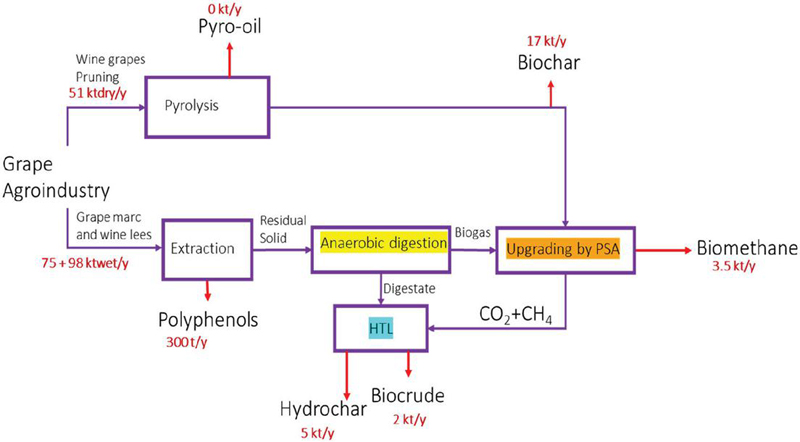
Figure 1 Block flow diagram for valorization of agro-industrial waste from wine production.
Anaerobic Digestion of Wine Residues
Potential biogas and biomethane volumes estimable from grape marc and wine lees Anaerobic Digestion (AD), along with preliminary digester sizing and reactor typology selection, were based on the quantities of wine residues produced in Cerignola area. The adopted methodology is based on the preliminary determination of available residual biomass quantities, their physicochemical characteristics, and their relative BioMethane Potential (BMP). Specifically, the annual total solids (TS) of grape marc and lees produced in the specified study area were used as the basis for calculating the potential biogas production. Indeed, knowing the TS value of the residual biomass and using literature data regarding the Volatile Solids (VS) and BMP content (Da Ros et al., 2016), it was possible to estimate the potential annual biogas production by applying the following equation:
| (2) |
where represents the annual biogas production from grape marc and wine lees; indicates the annual mass of total solids generated by each waste biomass; expresses the percentage of volatile solids relative to the total solids of the biomass, and corresponds to the biomethane potential of the substrate itself. The evaluation of energy potential was performed by quantifying the annual biogas yield from the available substrates, thereby enabling an estimation of the potential product (in terms of energy). AD plants, designed according to advanced engineering practices and innovative technological solutions, can operate for over 8,000 hours per year. Consequently, the annual biogas production is regarded as the reference parameter for determining the installed capacity required to ensure continuous operation over the specified period. Assuming an annual operating time of 8,700 hours and a biogas flow characterized by a Lower Calorific Value (LCV) of approximately 18,000 kJ/Nm3, equivalent to roughly 50% of the calorific value of methane, the theoretical extractable energy () can be quantified as follows:
| (3) |
Once the theoretical energy potential of the input organic matrices was determined, the corresponding Thermal Input () can be calculated. It represents the thermal power derived from the total energy content of the substrates processed annually. Thus, is expressed as the ratio between the total recoverable theoretical energy and the annual operating period of the plant.
| (4) |
The generated thermal energy is fed into the system, where it undergoes several conversion processes. This stage facilitates the partitioning of the energy into usable thermal output, electrical power, and inherent systemic losses. Assuming a thermal efficiency () of 50% and an electrical efficiency () of 38%, the recoverable thermal power (TP) and electrical power (EP) can be quantitatively defined as
| (5) | ||
| (6) |
Subsequent to determining the theoretical energy potential of the biogas produced by the anaerobic digestion of grape marc and lees, the operating parameters required to size the reactors were defined. After determining the specific density of each organic substrate, the biomass volumes and the corresponding daily feed volumetric flow rates were calculated. To ensure an optimal Hydraulic Retention Time (HRT) that allows complete degradation of the organic matter, a value of 25 days was set. This is a pivotal parameter in maintaining system balance, as an undersized HRT could lead to bacterial washout and incomplete degradation, while an oversized HRT might necessitate oversizing the digesters, incurring increased investment costs. Upon defining the overall volume, the number of functional units, and the system type, the applicable Organic Loading Rate (OLR) was concurrently verified. Given the elevated TS concentration in the marc grapes and wine lees, a Plug Flow Reactor (PFR) configuration was adopted, comprising six units operating in parallel.
Biochar Production by Wine Pruning Pyrolysis
Residual biomass (namely, wine pruning pellets) was pyrogasified by air in a bench scale continuous rotary kiln plant in an Italian specialized laboratory (ENEA, Trisaia). The bench scale plant consists of a screw feeding system, the rotary kiln reactor and a cooling system to quench organic vapors. Figure 2 shows the layout of the plant. Biomass hopper had a capacity of 5 liters (Figure 2(1)). The reactor had an inner diameter of 78 mm and a length of 1.2 m (Figure 2(3). It was surrounded by electrical heater (Figure 2(4)) to approach the process temperature that was set at 650∘C, and the rotational speed of the kiln was set at 10 rpm. Wine pruning pellets were fed to the reactor with a mass rate of 0.5 kg/h. The air equivalence ratio was set at 0.30 to burn partially the organic vapors and to supply the thermal duty of the process. Equivalence ratio is assumed as the ratio between the air feed and the ones for stoichiometric complete combustion. During the plant running, the biochar was collected in a downstream reservoir (Figure 2(5)) heated at temperature of 300∘C to avoid organic vapors condensation. Biochar was a black granular solid that approximately preserved the shape of the pellets. The organic vapors were quenched in a heat exchangers (Figure 2(6) and (7)) and collected in a flask. They were a brown dark bad smelling mixture of organic molecules and water. The incondensable gas gurgled in a water scubber (Figure 2(8)), then crossed a biological filter (Figure 2(9)), being thus analyzed by gas chromatography.
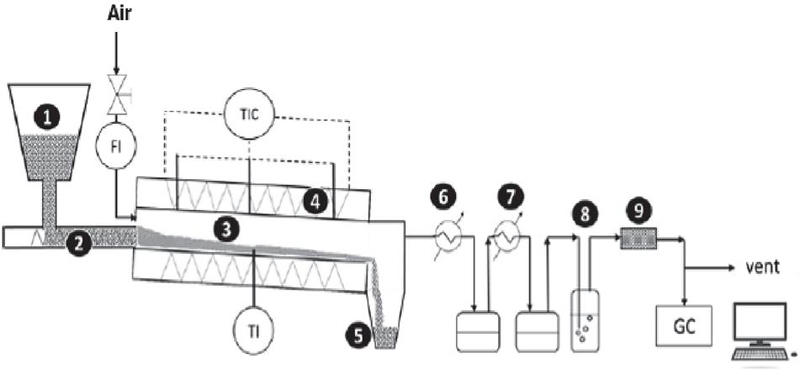
Figure 2 Layout of bench scale pyrogasifier for biochar production (see text for a practical explanation of line numbering).
Biogas Upgrading by Biochar-based PSA Purification
Biochar produced by pyrolysis of agricultural solid wastes from the wine-chain was a sustainable sorbent for biogas upgrading to biomethane via PSA. Previous experimental investigations (Mammarella et al., 2026) found that biochar obtained at ER 0.3 showed the best upgrading performance and was therefore selected for the current study. Experimental PSA operating conditions of 5 bar and 25∘C were chosen for that biochar to maximize biomethane recovery (65.6%) at the minimum CH4 purity required for grid injection (96%vol, UNI EN 16726), while ensuring high CO2/CH4 selectivity, and good CO2 sorption capacity. Preliminary scale-up of the PSA was performed assuming a constant Weight Hourly Space Velocity (WHSV, i.e. the ratio of the fed biogas flowrate to mass of adsorbent used in lab-scale tests). Furthermore, two identical PSA columns operating in parallel were considered to minimize the number of columns for continuous biomethane production (Vilardi et al., 2020). A one-year biochar lifetime was hypothesized as a precautionary assumption; this is a conservative approach compared with other feasibility studies on PSA plants for biogas upgrading, which use the same sorbent throughout the entire life cycle of the plant (Barbera et al., 2019). These considerations allowed estimating the amount of biochar-sorbent required as the whole packed-bed bulk for the PSA equipment. Mass balances were performed to estimate the production of biomethane and off-gas (a purge CO2-rich stream which contains residual unrecovered CH4), paying attention to valorize the latter.
Digestate Valorization by HydroThermal Liquefaction
The HTL process in biorefinery contexts has been extensively studied recently by several authors (e.g. Klüpfel et al., 2025; Tito et al., 2025), primarily for biofuel production. Its main limitation stems from the high thermal energy demand, driven by two factors: (i) maximum feedstock solid content of 20 wt% (requiring 80 wt% water) and (ii) high liquefaction temperatures of 320–380∘C needed to maximize crude bio-oil yield. Consequently, the energy required to heat the feed cannot be fully supplied by recovering combustion heat from the off-gas of the residual/post-PSA CO2-rich stream, which contains only 20% methane.
Table 2 Annual quantities, TS, VS, and BMP of grape marc and wine lees, used to define the yearly biogas potential production in Cerignola area (Apulia region, Southern Italy)
| Quantity/y | ST (%TQ) | SV (%ST) | BMP | |||
| [tWET/ | [tTS/ | [tVS/ | [Nm3/ | |||
| Residual Biomass | year] | year] | year] | [%] | [%] | kgSV] |
| Grape marcwet | 74,867 | 27,710 | 23,554 | 37% | 85% | 0.34 |
| Wine leeswet | 98,320 | 5,901 | 3,364 | 6% | 58% | 0.37 |
Results
Yields and Mass Flows
Using waste materials originating from the Cerignola area (see Table 1), polyphenol extraction can yield approximately 300 t/y of high-value antioxidant compounds. Subsequent valorization of the resulting residues (Table 2) enables biogas production, with annual potential estimates demonstrating the viability of integrated processing for both high-value biochemicals and renewable energy recovery from grape marc and wine lees. The total potential for biogas production is estimated at 19.3 106 Nm3/y. Given a methane concentration of 58%, the projected annual biomethane production is approximately 11.2 106 Nm3/y of CH.
As concerns the wine pruning pellets pyro-gasification for biochar production, the yield of biochar and pyro-oil were of 30%wt and about 10%wt respect to the starting feedstock. The balances were performed considering the estimated total potential biogas production of 19.3 106 Nm3/year with a CH4 purity of 58%vol and a biomethane recovery of 65.6%. Assuming the WHSV was 11 Nmkgh-1 and the annual biogas flow, the amount of biochar required for the upgrading system was approximately 400 kg/y per PSA column to ensure a continuous biomethane production. The material balance results (Table 2) demonstrate that the PSA system was capable of producing a biomethane flow of Nm3/year with a CH4 purity of 96%vol (following the specifications for grid injection). It is worth noting that the assumed biomethane recovery of 65.6% is lower than that declared for commercial sorbent, which can achieve CH4 recovery exceeding 85%. Consequently, the PSA off-gas stream retains a residual CH4 fraction of approximately 33%vol. This residual CH4 fraction highlights a critical challenge and opportunity in the valorization of the off-gas stream. By effectively utilizing this fraction, CH4 prevents the loss of valuable fuel and enhances the overall energy efficiency and sustainability of the upgrading process. The CH4 content of 33%vol makes the off-gas stream suitable for energy recovery, particularly for thermal energy generation. Finally, Table 3 shows the final global yields to target products by considering quantity of pruning grape march and wine lees (see Table 1, ‘Cerignola’) by varying the fraction of digestate stream sent to the HTL process. The highest values were obtained for 100% of digestate valorization to crude bio-oil. On the other hand, high flow rate into the HTL process corresponded to very high thermal energy requirements as described in the next section.
Table 3 Digestate to HTL statistics
| DIGESTATE to HTL | Biocrude Pyro-oil (t/y) | Hydrochar Biochar (t/y) |
| 1 | 30,900 | 28,800 |
| 0.775 | 23,600 | 26,200 |
| 0.55 | 16,000 | 24,100 |
| 0.325 | 8800 | 24,000 |
| 0.1 | 4300 | 15,300 |
Energy Balances and Heat Integration
In accordance with the methodology presented earlier in this paper, once the potential production of biogas was determined, the values of , , TP, and EP could be estimated (Table 4).
Table 4 Energy outputs potentially obtainable from the AD of grape marc and lees in Cerignola area
| Theoretical Energy (ETheroretical) | [kJ/year] | 3.48 1011 |
| Thermal Input (ITermal) | [MW] | 11.1 |
| Thermal power (TP) | [MWth] | 5.5 |
| Electric power (EP) | [MWel] | 3.9 |
From a thermal perspective, pyrolysis and HTL emerged as the most contentious processes presented in Figure 1 due to their high temperature requirements. Notably, pyrolysis operated as an auto-thermal process through direct combustion of syngas and pyrolysis oils. However, Table 5 demonstrated an energy surplus from purge gas combustion (post-PSA) that varies with the digestate fraction directed to HTL. The technically optimal point (highest mass yield) should be discarded as it cannot be taken as self-sustained. The optimal solution identifies 77.5% digestate allocation to HTL as the best thermal balance.
Table 5 Thermal balances on the HTL process by varying the wet digestate ratio
| Energy Surplus From | ||
| DIGESTATE to HTL | Purge Gas Combustion (MW) | Biocrude LHV (GJ/y) |
| 1 | 0.1 | 803′000 |
| 0.775 | 0.5 | 584′800 |
| 0.55 | 1.1 | 357′200 |
| 0.325 | 1.6 | 140′600 |
| 0.1 | 1.9 | 5′400 |
Discussion
This study evaluates the environmental and social performance of an integrated biorefinery for the valorization of residues from the winemaking supply chain. The analyzed system jointly processes vine shoots, wine lees, and pomace, converting them into high-value products and renewable energy sources, including polyphenols, biochar, biomethane, hydrochar, crude bio-oil, and electricity. Using a comparative approach, the objective of the study is to quantify the potential environmental benefits and potential critical issues associated with this model compared with a baseline scenario representative of current vineyard residue management practices and the conventional production of equivalent fossil-based products. In this perspective, a circular biorefinery model for the wine sector was proposed – aimed at converting grape pomace, wine lees, and pruning residues into biomethane and a crude bio-oil, through a synergistic combination of several processes (e.g. Vilardi et al., 2020). Both experimental and modelling results were combined to assess a novel process integration. Grape pomace and wine lees were considered as the substrate for the anaerobic digestion, biomethane was obtained from a pressure sorption adsorption process, while the off gases were used to substain the energy demand of the digestate (hydrothermal liquefaction). Vine prunings were treated by pyrolysis and used as the adsorbent phase in the pressure sorption adsorption. The results highlight yields to gaseous, liquid, and solid products of approximately 10%, 30%, and 30%wt on dry raw material basis, respectively, demonstrating effective mass partitioning across product streams in the integrated biorefinery process. Through strategic energy integration – leveraging pyro-gas, hydro-gas, and off-gases from biomethane upgrading – the valorization of the residual digestate proved sufficient to sustain the HydroThermal Liquefaction (HTL) processing of approximately 80% of total digestate stream. This synergy not only achieves near-complete waste utilization, but also enhances overall process efficiency, reducing external energy inputs by over 70% while maintaining favourable technical viability (Pierro et al., 2021).
Overall, the study highlights that the integrated valorization of vitivinicultural residues via biorefineries represents a promising solution for the transition to more circular and sustainable industrial models, capable of generating environmental and social benefits compared to conventional alternatives (Tito et al., 2025). However, the results should be interpreted taking into account the stated limitations, particularly related to the model-based nature of the plant data, the exclusion of certain life cycle phases, and the dependence of the results on scenario assumptions and background datasets (e.g. Vardopoulos et al., 2021). Moreover, these results suggest the need for further investigation into the contributions associated with the biomass supply chain, auxiliary processes, and background flows (Barbera et al., 2019). Additional hotspot analysis may indicate that the most environmentally relevant phases are hydrothermal liquefaction and the extraction phase, which account for the largest contributions in many impact categories and therefore represent priority areas for future optimization (Fatta et al., 2025). Within this framework, the work provides a basis for guiding subsequent technical analysis, process optimization, and decision support activities.
Concerning the possible limitations of the study, some minor compromises inherent to the environmental impact assessment methodology can be mentioned here. Among the main critical elements of this kind of study, we can mention the inherent difficulty in defining a functional unit (namely, system boundaries) and allocation procedures, as well as the selection of data sources and the formulation of assumptions regarding transportation, product use scenarios, and end-of-life options (Mammarella et al., 2026). Introducing flexible scale-up assumptions, and a broader discussion on mass balance closure, gas composition, and energy balance, can be also improved, e.g. running sensitivity analyses. Some data may be also limited to specific geographic areas or refer to technological and temporal contexts different from those in which the system is actually applied, thus introducing uncertainty into the results (e.g. Recanatesi et al., 2013). Furthermore, the methodological choices adopted (for instance, allocation criteria or reference values used in the functional unit) can significantly influence the outcomes of the impact calculation.
Concluding Remarks
Structured and standardized approaches allow quantifying the potential environmental and human health impacts associated with a product or service throughout its life cycle (Barbera et al., 2019). A product’s life cycle encompasses all stages of the system, from raw material acquisition to end-of-life, including raw material extraction and processing, production, distribution, use, and final disposal (namely delineating a ‘cradle-to-grave’ approach). Analyses oriented toward Life Cycle Assessment (LCA) can have various applications, namely (i) identifying opportunities for product improvement at various points in their life cycle; (ii) decision-making support (e.g. strategic planning, prioritization, design or redesign of products and processes; and (iii) marketing (e.g. environmental declarations, eco-labelling schemes, or environmental product declarations). In this perspective, our study provides operational insights into the valorisation of agro-industrial residues through integrated and sustainable strategies, a process receiving increased attention due to its potential environmental, energetic, and economic benefits.
The study also encourages a preliminary assessment of feedstock availability carried out using standard methodologies, as possibly documented in a specific ‘biomass atlas’ geo-spatial (WebGIS) application (e.g. Egidi et al., 2021), followed by a quantitative evaluation of process yields and potential outputs. In this ambit, it should be also considered the importance of a complete Life Cycle Inventory (LCI) involving compiling and quantifying a system’s input and output flows throughout its life cycle (e.g. Cerdà et al., 2021). This phase may include data collection, compiling inventory tables, system modeling, and calculating LCI results (Recanatesi et al., 2013; Salvati et al., 2016). Specific limitations should be also addressed in future research, including the facts that (i) primary system data are derived from plant simulations and not from actual industrial operations; (ii) some life cycle phases, such as construction, maintenance, and end-of-life of the biorefinery, were not included within the scope of the study; (iii) a social life cycle assessment should be introduced, although these results may represent potential social risks, not actual social impacts. Consequently, the emerging evidence should be considered as solid support for scenario comparisons and decision-making guidance, rather than as absolute and definitive assessments. The analysed biorefinery system definitely offers a concrete potential for improvement compared with the conventional scenario – both environmentally and socially – although further refinements are required to reduce the trade-offs that emerged and to consolidate the results through data more representative of the future application scale.
Acknowledgments
This study is part of the national project ‘PERCIVAL’ funded through the program PON 2014-2020.
References
Barbera, E., Menegon, S., Banzato, D., D’Alpaos, C., Bertucco, A., 2019. From biogas to biomethane: A process simulation-based techno-economic comparison of different upgrading technologies in the Italian context. Renewable Energy 135, 663–673. https://doi.org/10.1016/j.renene.2018.12.052.
Biasi, R., Brunori, E., Ferrara, C., Salvati, L. 2019. Assessing impacts of climate change on phenology and quality traits of Vitis vinifera L.: The contribution of local knowledge. Plants 8(5), Article 121.
Cerdà, A., Daliakopoulos, I. N., Terol, E., Novara, A., Fatahi, Y., Moradi, E., Salvati, L., Pulido, M., 2021. Long-term monitoring of soil bulk density and erosion rates in two Prunus persica (L.) plantations under flood irrigation and glyphosate herbicide treatment in La Ribera district, Spain. Journal of Environmental Management, 282, Article 111965.
Da Ros, C., Cavinato, C., Bolzonella, D., Pavan, P., 2016. Renewable energy from thermophilic anaerobic digestion of winery residue: Preliminary evidence from batch and continuous lab-scale trials. Biomass and Bioenergy 91, 150–159. https://doi.org/10.1016/j.biombioe.2016.05.017.
Doukas, Y. E., Salvati, L., Vardopoulos, I., 2023. Unraveling the European agricultural policy sustainable development trajectory. Land 12(9), Article 1749.
Egidi, G., Cividino, S., Paris, E., Palma, A., Salvati, L., Cudlin, P., 2021. Assessing the impact of multiple drivers of land sensitivity to desertification in a Mediterranean country. Environmental Impact Assessment Review 89, Article 106594.
Fatta, V., Petrone, M.T., Giuliano, A., De Bari, I., Pierro, N., 2025. Biorefinery Assessment and Techno-economic-environmental Supply Chain Optimization for the Southern Italy Wine Agroindustry. Chemical Engineering Transactions 119, 217–222. https://doi.org/10.3303/CET25119037.
Giuliano, A., Di Giacomo, A., De Bari, I., Barletta, D., 2026. Techno-Economic Assessment of Two Process Routes for Lignin-Derived Alkylphenols and Aromatic Hydrocarbons. ACS Omega 11, 9201–9211. https://doi.org/10.1021/acsomega.5c08334.
Giuliano, A., Robinson Medici, A., Barletta, D., 2025. Integrating Techno-Economic and Environmental Criteria in the Design and Optimization of a Full Utilization Multiproduct Lignocellulosic Biorefinery. ACS Sustainable Chem. Eng. acssuschemeng.4c06590. https://doi.org/10.1021/acssuschemeng.4c06590.
Kazemzadeh-Zow, A., Zanganeh Shahraki, S., Salvati, L., Samani, N. N., 2017. A spatial zoning approach to calibrate and validate urban growth models. International Journal of Geographical Information Science 31(4), 763–782.
Klüpfel, C., Yuan, B., Biller, P., Herklotz, B., 2025. Hydrothermal liquefaction as a treatment technology for anaerobic digestate: A review. Renewable and Sustainable Energy Reviews 210, 115156. https://doi.org/10.1016/j.rser.2024.115156.
Mammarella, D., Gallucci, K., Di Giuliano, A., 2026. Biochar from waste vineyard pruning as a selective sorbent for biogas upgrading by pressure swing adsorption: Experimental and modelling study. Chemical Engineering Journal Advances 25, 101050. https://doi.org/10.1016/j.ceja.2026.101050.
Pierro, N., Giocoli, A., Motola, V., Dipinto, S., 2021. Valutazione disponibilità biomasse agro-industriali a livello nazionale e loro pubblicazione sul portale Webgis atlante delle biomasse [WWW Document]. URL https://iris.enea.it/handle/20.500.12079/56881 (accessed 10.17.23).
Quaranta, G., Salvia, R., Salvati, L., Paola, V. D., Coluzzi, R., Imbrenda, V., Simoniello, T., 2020. Long-term impacts of grazing management on land degradation in a rural community of Southern Italy: Depopulation matters. Land Degradation & Development, 31(16), 2379–2394.
Recanatesi, F., Ripa, M. N., Leone, A., Perini, L., Salvati, L., 2013. Land use, climate and transport of nutrients: Evidence emerging from the Lake Vico case study. Environmental Management, 52(2), 503–513.
Sallustio, L., Pettenella, D., Merlini, P., Romano, R., Salvati, L., Marchetti, M., Corona, P., 2018. Assessing the economic marginality of agricultural lands in Italy to support land use planning. Land Use Policy 76, 526–534.
Salvati, L., Kosmas, C., Kairis, O., Karavitis, C., Acikalin, S., Belgacem, A., Solé-Benet, A., Chaker, M., Fassouli, V., Gokceoglu, C., Gungor, H., Hessel, R., Khatteli, H., Kounalaki, A., Laouina, A., Ocakoglu, F., Ouessar, M., Ritsema, C., Sghaier, M., Sonmez, H., Taamallah, H., Tezcan, L., De Vente, J., Kelly, C., Colantoni, A., Carlucci, M., 2016. Assessing the effectiveness of sustainable land management policies for combating desertification: A data mining approach. Journal of Environmental Management 183, 754–762.
Tito, E., Landi, D., Demichelis, F., Pipitone, G., Bensaid, S., Pirone, R., 2025. Hydrothermal liquefaction of digestate from the organic fraction of municipal solid waste: Optimization of operating parameters. Energy Convers. Manage. 336. https://doi.org/10.1016/j.enconman.2025.119881.
Vardopoulos, I., Tsilika, E., Sarantakou, E., Zorpas, A. A., Salvati, L., Tsartas, P., 2021. An integrated SWOT-PESTLE-AHP model assessing sustainability in adaptive reuse projects. Applied Sciences 11(15), 7134.
Vilardi, G., Bassano, C., Deiana, P., Verdone, N., 2020. Exergy and energy analysis of biogas upgrading by pressure swing adsorption: Dynamic analysis of the process. Energy Conversion and Management 226, 113482. https://doi.org/10.1016/j.enconman.2020.113482.
Strategic Planning for Energy and the Environment, Vol. 45_3, 775–790
doi: 10.13052/spee1048-5236.4536
© 2026 River Publishers