Substance P/Neurokinin 1 Receptor Involvement in Breast Cancer Progression Supports Therapeutic Repurposing of the Drug Aprepitant
DOI:
https://doi.org/10.13052/ijts2246-8765.2025.023Keywords:
Substance P/NeurokininAbstract
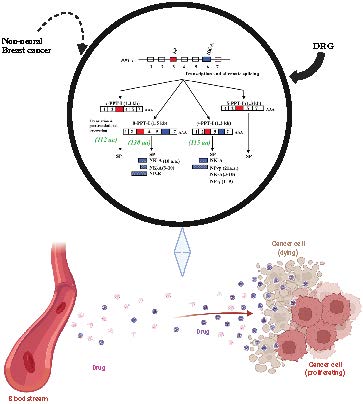
This opinion article discusses the findings of a published article, which reported on the mechanism by which neuronal substance P (SP) drives metastasis through an extracellular RNA–TLR7 axis [1]. The role of SP in cancer is not a novel finding. Rather, SP’s effect on cancer is linked to a long-held view on the neural–hematopoietic axis. Since the article omitted several seminal findings, we organized this review/commentary that discusses the landscape of SP in breast cancer. We also include our collective thoughts on the cited article that mostly support the past literature. Our article is intended to enhance the field of the neural-substance P-cancer axis and applaud the authors for their exciting findings. We believe that their findings further underscore the need to target breast cancer with an SP receptor antagonist. In this regard, we propose repurposing of aprepitant to treat breast cancer.
Downloads
References
Padmanaban, V., I. Keller, E. S. Seltzer, B. N. Ostendorf, Z. Kerner, and S. F. Tavazoie. 2024. Neuronal substance P drives metastasis through an extracellular RNA-TLR7 axis. Nature 633: 207–215.
Singh, D., D. D. Joshi, M. Hameed, J. Qian, P. Gascon, P. B. Maloof, A. Mosenthal, and P. Rameshwar. 2000. Increased expression of preprotachykinin-I and neurokinin receptors in human breast cancer cells: implications for bone marrow metastasis. Proc Natl Acad Sci USA 97: 388–393.
Rao, G., P. S. Patel, S. P. Idler, P. Maloof, P. Gascon, J. A. Potian, and P. Rameshwar. 2004. Facilitating role of preprotachykinin-I gene in the integration of breast cancer cells within the stromal compartment of the bone marrow: a model of early cancer progression. Cancer Res 64: 2874–2881.
Patel, H. J., S. H. Ramkissoon, P. S. Patel, and P. Rameshwar. 2005. Transformation of breast cells by truncated neurokinin-1 receptor is secondary to activation by preprotachykinin-A peptides. Proc Natl Acad Sci USA 102: 17436–17441.
Miguel Muñoz, M. R., Riffat Mehboob, Francisco Esteban, Chapter 16 – Substance P in cancer, Editor(s): Robert Vink, In Molecular Mediators in Health and Disease: How Cells Communicate, Substance P, Academic Press, 2025, Pages 373–399.
Patel, S. A., S. H. Ramkissoon, M. Bryan, L. F. Pliner, G. Dontu, P. S. Patel, S. Amiri, S. R. Pine, and P. Rameshwar. 2012. Delineation of breast cancer cell hierarchy identifies the subset responsible for dormancy. Sci Rep 2: 906.
Parton, M., M. Dowsett, and I. Smith. 2001. Studies of apoptosis in breast cancer. BMJ 322: 1528–1532.
Ferrer-Diaz, A. I., G. Sinha, A. Petryna, R. Gonzalez-Bermejo, Y. Kenfack, O. Adetayo, S. A. Patel, A. Hooda-Nehra, and P. Rameshwar. 2024. Revealing role of epigenetic modifiers and DNA oxidation in cell-autonomous regulation of Cancer stem cells. Cell Commun Signal 22: 119.
Munoz, M., A. Gonzalez-Ortega, M. V. Salinas-Martin, A. Carranza, S. Garcia-Recio, V. Almendro, and R. Covenas. 2014. The neurokinin-1 receptor antagonist aprepitant is a promising candidate for the treatment of breast cancer. Int J Oncol 45: 1658–1672.
Davoodian, M., N. Boroumand, M. Mehrabi Bahar, A. H. Jafarian, M. Asadi, and S. I. Hashemy. 2019. Evaluation of serum level of substance P and tissue distribution of NK-1 receptor in breast cancer. Mol Biol Rep 46: 1285–1293.
Joshi, D. D., A. Dang, P. Yadav, J. Qian, P. S. Bandari, K. Chen, R. Donnelly, T. Castro, P. Gascon, A. Haider, and P. Rameshwar. 2001. Negative feedback on the effects of stem cell factor on hematopoiesis is partly mediated through neutral endopeptidase activity on substance P: a combined functional and proteomic study. Blood 98: 2697–2706.
Munoz, M., and R. Covenas. 2020. The Neurokinin-1 Receptor Antagonist Aprepitant: An Intelligent Bullet against Cancer? Cancers (Basel) 12: 2682.
Yang, C., Y. Sun, X. Ouyang, J. Li, Z. Zhu, R. Yu, L. Wang, L. Jia, G. Ding, Y. Wang, and F. Jiang. 2020. Pain May Promote Tumor Progression via Substance P-Dependent Modulation of Toll-like Receptor-4. Pain Med 21: 3443–3450.
Gutierrez, S., and M. D. Boada. 2025. NK1 receptor blockade disrupts microtumor growth and aggregation in a three-dimensional murine breast cancer model. Neuropeptides 109: 102479.
Munoz, M. F., S. Arguelles, M. Rosso, R. Medina, R. Covenas, A. Ayala, and M. Munoz. 2022. The Neurokinin-1 Receptor Is Essential for the Viability of Human Glioma Cells: A Possible Target for Treating Glioblastoma. Biomed Res Int 2022: 6291504.
Lee M., M. M., Staples S. . 2016. Prolonged use of aprepitant in metastatic breast cancer and a reduction in CA153 tumour marker levels. Int. J. Cancer Clin. Res. 3:071.
Munoz, M., J. C. Crespo, J. P. Crespo, and R. Covenas. 2019. Neurokinin-1 receptor antagonist aprepitant and radiotherapy, a successful combination therapy in a patient with lung cancer: A case report. Mol Clin Oncol 11: 50–54.
Botteri, E., S. Hjorth, F. Conforti, V. Bagnardi, B. K. Andreassen, N. C. Stoer, S. Bhargava, G. Ursin, S. Gandini, E. K. Sloan, and A. Chang. 2025. Aprepitant use during chemotherapy and association with survival in women with early breast cancer. J Natl Cancer Inst 117: 2249–2258.
Munoz, M., M. Rosso, and R. Covenas. 2020. Triple Negative Breast Cancer: How Neurokinin-1 Receptor Antagonists Could Be Used as a New Therapeutic Approach. Mini Rev Med Chem 20: 408–417.
Robinson, P., R. Covenas, and M. Munoz. 2023. Combination Therapy of Chemotherapy or Radiotherapy and the Neurokinin-1 Receptor Antagonist Aprepitant: A New Antitumor Strategy? Curr Med Chem 30: 1798–1812.
Chen, M., and D. Zhao. 2024. Invisible Bridges: Unveiling the Role and Prospects of Tunneling Nanotubes in Cancer Therapy. Mol Pharm 21: 5413–5429.
Singh, A. K., and Y. Pan. 2025. Neuronal transfer of mitochondria to tumour cells promotes cancer spread. Nature 644: 46–47.
Nawa, H., H. Kotani, and S. Nakanishi. 1984. Tissue-specific generation of two preprotachykinin mRNAs from one gene by alternative RNA splicing. Nature 312: 729–734.
Castro-Obregon, S., G. Del Rio, S. Chen, R. Swanson, H. Frankowski, R. Rao, V. Stoka, S. Vesce, D. Nicholls, and D. Bredesen. 2002. A ligand-receptor pair that triggers a non-apoptotic form of programmed cell death. Cell Death Differ 9: 807–817.
Mantyh, P. W., T. Gates, C. R. Mantyh, and J. E. Maggio. 1989. Autoradiographic localization and characterization of tachykinin receptor binding sites in the rat brain and peripheral tissues. J Neurosci 9: 258–279.